 Promotions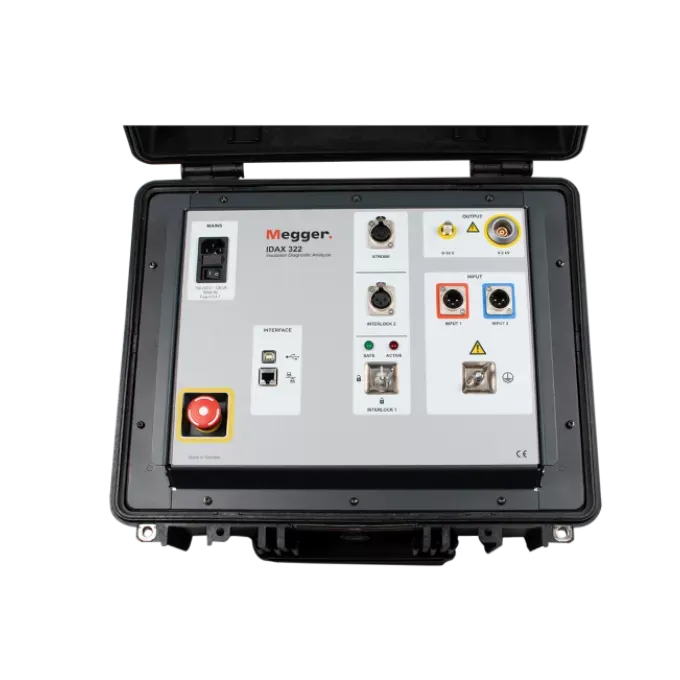
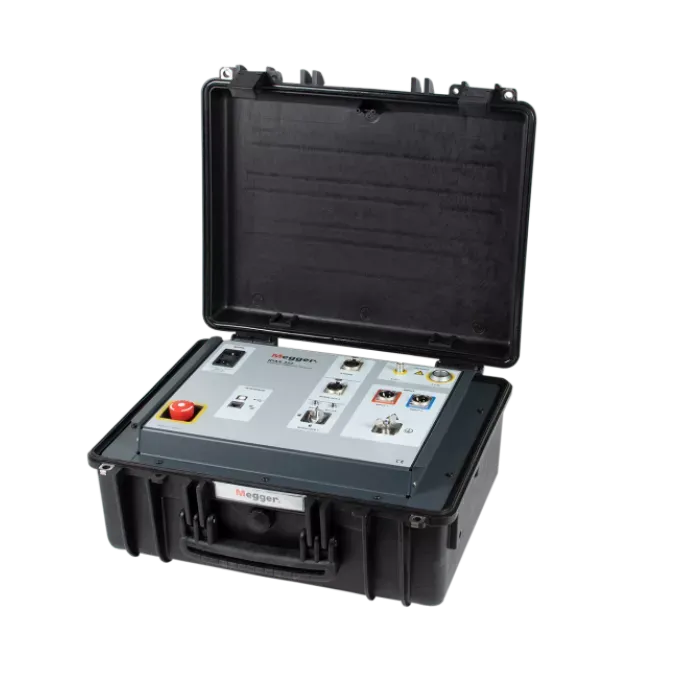
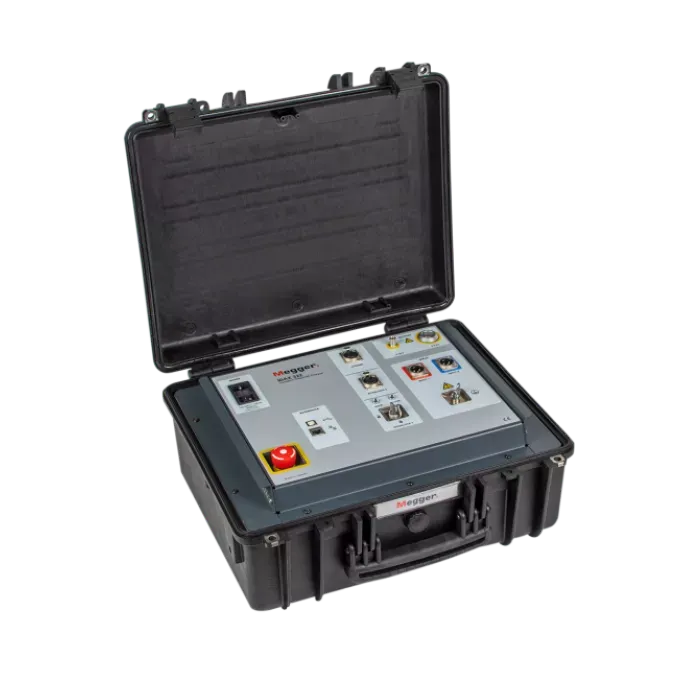
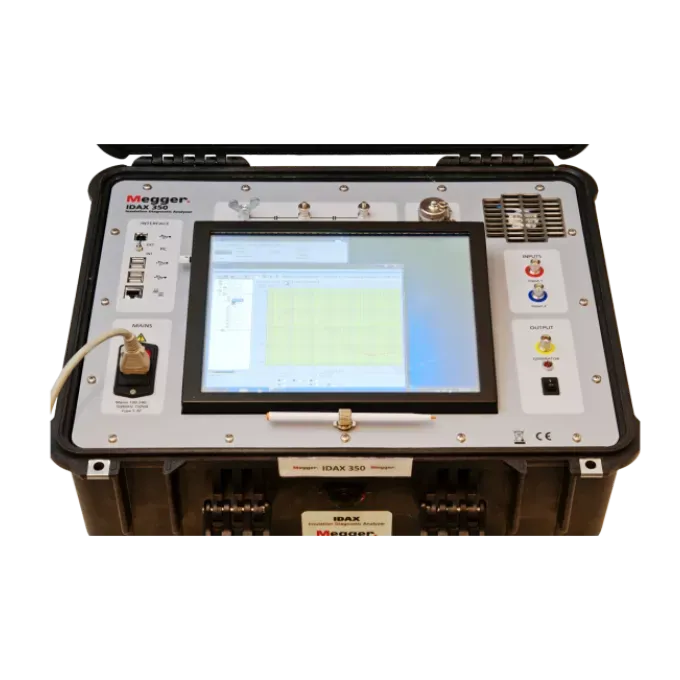
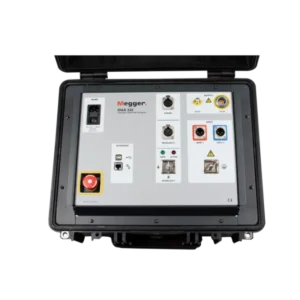
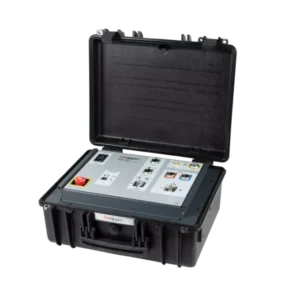
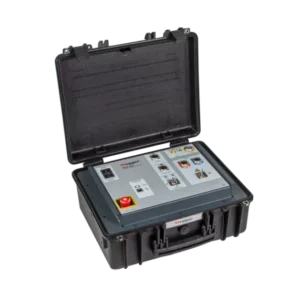
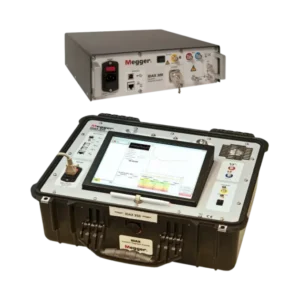
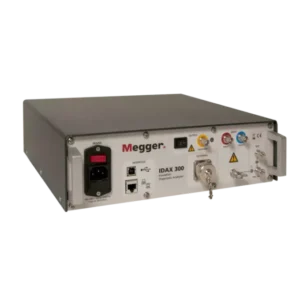
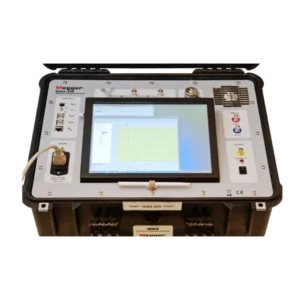


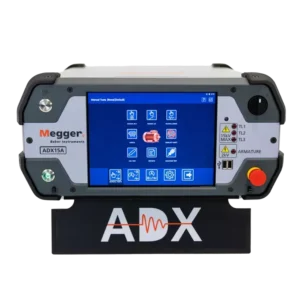
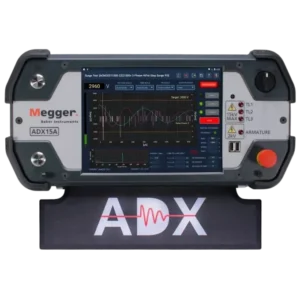
Megger IDAX Series Insulation Diagnostic Analyser — IDAX300 / IDAX300S / IDAX322 / IDAX350
The insulation question a power factor test can’t fully answer
A single-frequency power factor or tan delta test at 50 Hz gives you one data point on a transformer’s insulation condition — and on its own, that data point can be misleading. Temperature effects alone can shift a power factor reading enough to mask a genuine moisture problem or hide it behind a result that looks acceptable. Oil sampling has its own blind spot: most of the moisture in a power transformer resides in the solid cellulose insulation, not the oil, so an oil test alone routinely underestimates how wet a transformer actually is.
This is the gap dielectric frequency response (DFR) testing was built to close, and it’s the technology behind the Megger IDAX series. Instead of one measurement at one frequency, DFR sweeps tan delta, power factor and capacitance across a wide frequency range — and because the shape of that curve depends on insulation geometry, moisture content, oil conductivity and temperature, it can be modelled to extract each of those variables individually rather than guessing at them from a single blended number.
How DFR — and the IDAX — actually work
DFR is also known as frequency domain spectroscopy (FDS). Where SFRA (Megger’s separate FRAX series) assesses a transformer’s mechanical integrity by sweeping a signal through the winding at high frequency, DFR assesses insulation condition by measuring capacitance and dissipation factor across a much lower frequency range — typically from around 1 mHz up to 1 kHz. The two tests are frequently confused because both sweep frequency, but they answer entirely different questions about the same asset, and Megger recommends running both as part of a complete transformer diagnostic program.
The IDAX applies advanced curve-fitting against a reference material model to calculate moisture content in solid insulation, oil conductivity at a 25 °C reference temperature, and tan delta/power factor at a 20 °C reference temperature — all from the one DFR sweep. Because the accuracy of that model depends on knowing the actual temperature of the insulation being tested (not the ambient temperature), the IDAX applies Individual Temperature Correction (ITC), a Megger-developed method that translates test data recorded at the transformer’s actual temperature back to the standard reference temperatures for valid, apples-to-apples comparison against other tests and other transformers.
What sets the IDAX apart on measurement speed is a novel combination of time-domain (PDC) and frequency-domain data. Separate reference models are fitted to each data set before they’re transformed and combined, avoiding the artefacts that older combined-method instruments can introduce — and delivering what Megger positions as the fastest full DFR measurement (1 kHz down to 10 µHz) available in the market. In practice, a full transformer DFR test using the IDAX generally runs under 20 minutes; a bushing test typically takes under 5 minutes.
IDAX300, IDAX300S, IDAX322, IDAX350 — which one fits your work
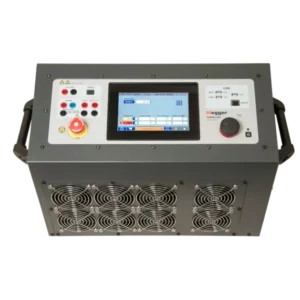
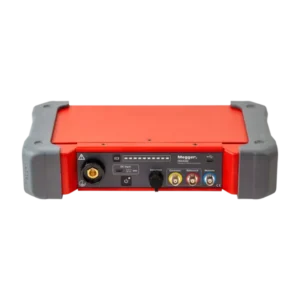
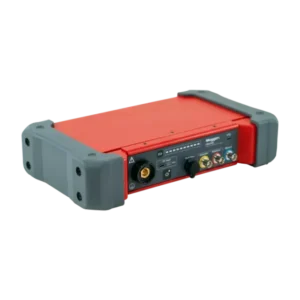
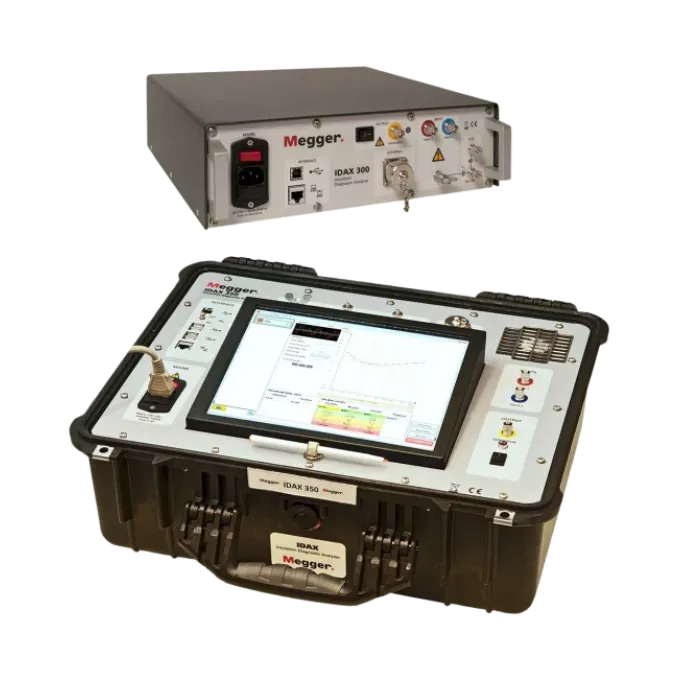
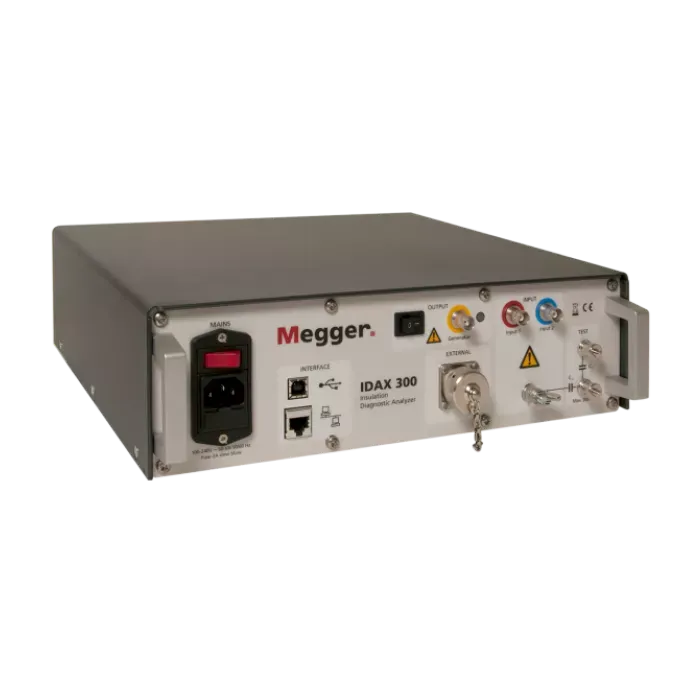
IDAX300 — the compact, entry point to the range: a 3-channel input (red, blue, ground), 3-terminal (generator, measure, guard) instrument with a single ammeter, controlled by an external laptop running the IDAX software.
IDAX300S — identical hardware platform to the IDAX300, but with a second ammeter fitted, enabling two simultaneous measurements. That matters more than it sounds: it lets you test two HV bushings at once, or simultaneously measure both interwinding insulation systems on a three-winding transformer (e.g. CLH and CLT) — no other instrument on the market performs genuinely simultaneous frequency-domain measurement across two channels without sharing a single ammeter (and therefore sacrificing accuracy or time).
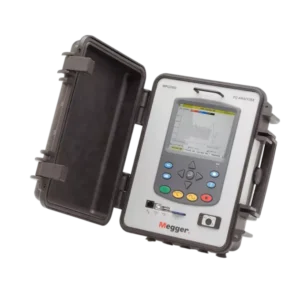
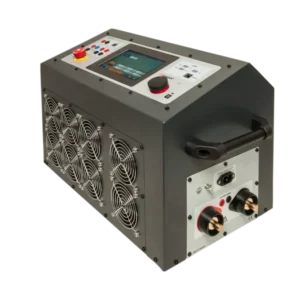
IDAX350 — the IDAX300S measurement platform housed in a rugged, waterproof case with an on-board computer, so it can run standalone in the field without a separate laptop, and can also be used to control other compatible Megger instruments.
IDAX322 — purpose-built for low-capacitance test objects. Where the standard IDAX range tops out at 10 V peak on its internal generator (extendable to 200 V peak, or 2 kV with the external VAX020 amplifier), the IDAX322 has a 2 kV / 50 mA peak amplifier built in, giving it the signal-to-noise ratio needed to get meaningful DFR results directly on bushings and current transformers without a separate external amplifier. It carries the same dual-ammeter simultaneous-measurement capability as the IDAX300S.
For lower-capacitance testing on the standard IDAX300/300S/350 platform, Megger’s external VAX020 amplifier extends output to 2 kV, and the VAX220/230 (available on request) extends to 20/30 kV for specialised applications such as XLPE cable water-treeing assessment.
Where DFR and the IDAX fit an Australian testing program
- Power transformer moisture assessment — the primary and most common IDAX application. Moisture accelerates cellulose ageing, lowers the oil’s dielectric strength, and reduces the transformer’s safe loading capability by bringing it closer to bubble inception temperature at a given load. DFR is the only field-practical method that assesses moisture in the solid insulation directly, rather than inferring it from an oil sample.
- Bushing and current transformer condition monitoring — bushing failure is responsible for a disproportionate share of transformer fires and explosive failures, and traditional line-frequency power factor testing can return a false-OK result on a bushing with a real problem. DFR — ideally with the IDAX322 or an IDAX plus VAX020 for the extra signal-to-noise margin — has also proven effective at detecting traces of partial discharge in HV and EHV bushings.
- Cable diagnostics — paired with a VAX220/230 high-voltage amplifier, the IDAX can assess XLPE cable condition and detect water treeing by comparing DFR curves at 25/50/75/100% of service phase-to-ground voltage.
- Industrial dry-out and impregnation monitoring — repeated DFR sweeps at fixed intervals during transformer dry-out, or during impregnation/curing of dry cellulose with resins, give a real-time read on when a process goal (like target dryness) has actually been reached, rather than relying on a fixed time budget.
- Calibration labs and independent test houses offering DFR/moisture assessment as a standalone service alongside SFRA and power factor testing for utility and industrial clients.
Software that gives you an answer, not just a curve
The IDAX software runs an automated test flow and presents results using an easy-to-read “traffic light” system, so a field technician doesn’t need to be a DFR specialist to get a usable read on moisture content, oil conductivity and temperature-corrected power factor. The IDAX DFR method underpins guidance in CIGRE TB 254, TB 414, TB 445 and TB 775, and IEEE C57.152-2013 and C57.161-2018 — the standards utilities and asset managers already reference for transformer diagnostic testing.
For bushing-heavy testing sessions, the optional DFR500 switchbox connects the transformer and all high-side bushings through a single set-up, removing the need for repeated re-connections and ladder climbs between individual bushing tests — controlled from a small, colour-coded switch panel at ground level.
What to check before you order
DFR interpretation depends on accurately recording the insulation temperature at the time of test — for a transformer, that’s the oil or winding temperature, not ambient air temperature — so factor a reliable temperature reference into your test procedure (an optional temperature/humidity meter is available as an accessory). If your scope includes low-capacitance objects like bushings and CTs, confirm whether the IDAX322’s built-in 2 kV amplifier or a standard IDAX plus external VAX020 better fits your kit — the IDAX322 trades a touch of portability for one-box convenience. And if your program also needs mechanical (SFRA) assessment of the same transformers, Megger’s FRAX series is the complementary instrument — DFR and SFRA test different failure modes and are commonly run together, not interchangeably.
Get your IDAX sorted
Rapid-Tech supplies the Megger IDAX300, IDAX300S, IDAX322 and IDAX350 with local support, and can help match the right configuration — including VAX020/220 amplifier and DFR500 switchbox options — to your bushing, transformer and cable testing scope. Request a quote and we’ll get your DFR test set ready for the field.
Technical Specifications
| Specification | IDAX300 / IDAX300S | IDAX350 | IDAX322 | Why It Matters |
|---|---|---|---|---|
| Test technology | Dielectric Frequency Response (DFR / FDS) | Dielectric Frequency Response (DFR / FDS) | Dielectric Frequency Response (DFR / FDS), high-voltage | Wide-frequency sweep separates moisture, oil conductivity and insulation ageing rather than one blended power factor reading |
| Ammeters | 1 (IDAX300) or 2 (IDAX300S) | 2 | 2 | Dual ammeters enable genuinely simultaneous two-channel measurement — test two bushings or two winding pairs at once |
| Generator voltage range | 0–10 V peak (standard); 0–200 V peak (extended) | 0–10 V peak (standard); 0–200 V peak (extended) | 0–10 V peak (standard); 0–2 kV peak (built-in) | IDAX322’s built-in 2 kV amplifier removes the need for a separate external unit on bushing/CT work |
| Frequency range | DC, 0.1 mHz – 10 kHz | DC, 0.1 mHz – 10 kHz | 10 V range: DC–10 kHz; 2 kV range: DC–1 kHz | Broad frequency coverage supports both fast screening sweeps and full moisture-modelling sweeps |
| Capacitance range | 10 pF – 100 µF | 10 pF – 100 µF | 10 pF – 100 µF | Covers everything from small bushings/CTs to large power transformer windings |
| Typical full DFR test time | ~5 min (fast) to ~2h 55min (extended low-frequency) | ~5 min (fast) to ~2h 55min (extended low-frequency) | Comparable, bushing/CT-focused | Fastest DFR measurement in its class per Megger; a standard transformer test is typically under 20 minutes |
| Bushing test time (typical) | Under 5 minutes | Under 5 minutes | Under 5 minutes | Enables practical bushing/CT screening during a normal outage window |
| On-board control | External laptop required | Built-in computer, no laptop required | External laptop required | IDAX350’s on-board PC suits a self-contained rugged field kit |
| Housing | Standard case | Rugged, waterproof case | Standard case | IDAX350 suited to harsher outdoor/substation environments |
| Operating temperature | -20 °C to +55 °C (IDAX300) | -10 °C to +55 °C | -20 °C to +55 °C | Wide range suits Australian conditions from alpine to tropical sites |
| Weight (instrument) | 4.9 kg (IDAX300) | 13.7 kg | 13 kg | Lighter IDAX300 suits solo field carry; IDAX350/322 trade weight for a more complete on-site kit |
| Power supply | 100–240 V AC ±10%, 50/60 Hz | 100–240 V AC ±10%, 50/60 Hz | 100–240 V AC ±10%, 50/60 Hz | Universal mains input suits Australian and international site power |
| Interface | USB 2.0 and Ethernet | USB 2.0 and Ethernet | USB 2.0 and Ethernet | Standard connectivity for data transfer and PC/software control |
| Test modes | UST-R/B/RB, GST-GND, GSTg-R/B/RB, and simultaneous dual-mode combinations | Same as IDAX300S | UST-R/B/RB, GST-GND, GSTg-R/B/RB, plus simultaneous dual-mode combinations | Flexible guarded/unguarded test modes support transformers, bushings and CTs from one instrument |
| Individual Temperature Correction (ITC) | Yes, automated | Yes, automated | Yes, automated (single-material version for bushings/CTs) | Corrects results to reference temperature for valid year-on-year and unit-to-unit comparison |
| Calibration | Field calibration possible with IDAX Calibration Box CAL300 | Field calibration possible with IDAX Calibration Box CAL300 | Field calibration possible with IDAX Calibration Box CAL300 | On-site verification option between full service calibrations |
| Standards referenced | Cigre TB 254, TB 414, TB 445, TB 775; IEEE C57.152-2013, C57.161-2018 | Same | Same | Aligns with the international guides utilities already reference for transformer insulation diagnostics |
| Key optional accessories | DFR500 switchbox, VAX020 (2 kV) / VAX220 (20–30 kV, on request) amplifiers, IDAX calibration box CAL300 | Same | DFR500 switchbox | Extends the platform to bushings, CTs and XLPE cable testing without a second instrument |
What is dielectric frequency response (DFR) testing? DFR — also called frequency domain spectroscopy (FDS) — is a diagnostic technique that measures a transformer or bushing’s capacitance and dissipation factor (tan delta/power factor) across a wide range of frequencies, typically from around 1 mHz to 1 kHz. Because the shape of the resulting curve depends on insulation geometry, moisture content, oil conductivity and temperature, DFR data can be modelled to calculate each of these factors individually — giving a far more complete insulation assessment than a single-frequency power factor test.
What’s the difference between DFR and SFRA testing? DFR and SFRA are different tests that are often confused because both sweep across frequency. DFR (performed with Megger’s IDAX series) assesses the condition of a transformer’s insulation — moisture content, oil conductivity and dielectric losses. SFRA (performed with Megger’s FRAX series) assesses the mechanical integrity of the core and windings by measuring signal transfer through the winding. The two are complementary and commonly performed together, not as substitutes for each other.
How does the IDAX measure moisture in transformer insulation? The IDAX applies a swept dielectric frequency response signal and fits the resulting capacitance and loss data to a reference material model. Using Individual Temperature Correction (ITC) to translate the reading to a standard reference temperature, this model calculates the moisture content of the solid (cellulose) insulation, the oil’s conductivity, and the temperature-corrected tan delta/power factor — all from one field test, without decommissioning or disassembling the transformer.
What’s the difference between the IDAX300, IDAX300S, IDAX322 and IDAX350? The IDAX300 is a single-ammeter instrument controlled by an external laptop. The IDAX300S adds a second ammeter for simultaneous two-channel measurement. The IDAX350 uses the same dual-ammeter platform as the IDAX300S but is housed in a rugged, waterproof case with a built-in computer for standalone field operation. The IDAX322 shares the dual-ammeter, simultaneous-measurement capability but has a built-in 2 kV amplifier, purpose-built for low-capacitance objects like bushings and current transformers that need a higher test voltage for an adequate signal-to-noise ratio.
Why does bushing testing need a higher voltage DFR instrument? Bushings and current transformers have much lower capacitance than power transformer windings, which makes it harder to achieve a good signal-to-noise ratio at typical DFR test voltages. A higher test voltage — such as the IDAX322’s built-in 2 kV output, or a standard IDAX paired with Megger’s external VAX020 amplifier — improves measurement accuracy on these low-capacitance objects and is generally recommended over standard-voltage DFR testing for bushings and CTs.