
 Promotions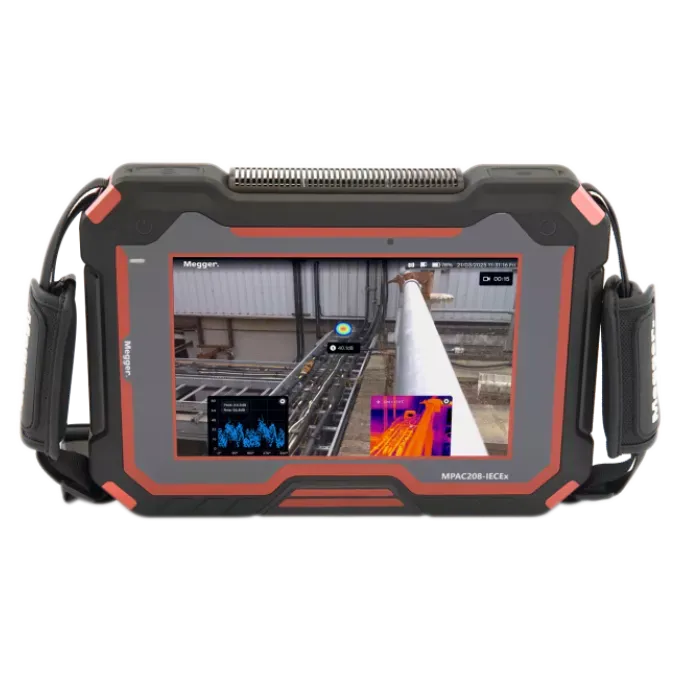


The Problem: Invisible Faults That Drain Budgets and Create Risk
Compressed air systems are among the most energy-intensive infrastructure in Australian industrial facilities — and among the least scrutinised. Studies consistently show that undetected leaks in compressed air networks waste between 20–30% of total compressed air output, translating to thousands of dollars in lost energy every year. Gas distribution networks face similar exposure.
On the electrical side, partial discharge in ageing MV and HV switchgear rarely announces itself until something fails catastrophically. Bearing wear in rotating machinery, cavitation in pumps, and valve leakage generate distinctive ultrasonic signatures long before they cause downtime — but only if someone is equipped to hear them.
Traditional inspection methods have real limitations: ultrasonic stethoscopes require physical contact or very close range; thermal cameras can miss early-stage PD and most mechanical defects; contact sensors interrupt production. What maintenance teams need is a non-contact, wide-area diagnostic tool that makes the invisible visible — quickly and in quantifiable terms.
The Solution: Acoustic Imaging That Lets You See Sound
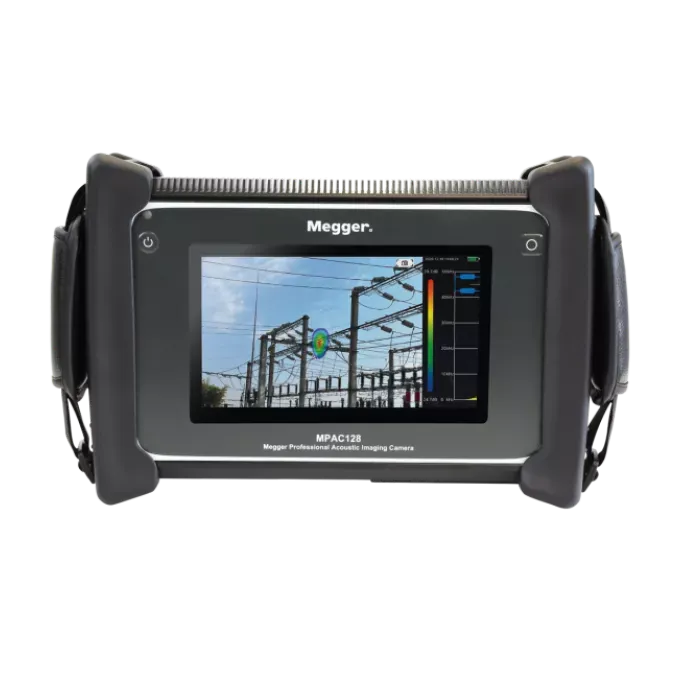
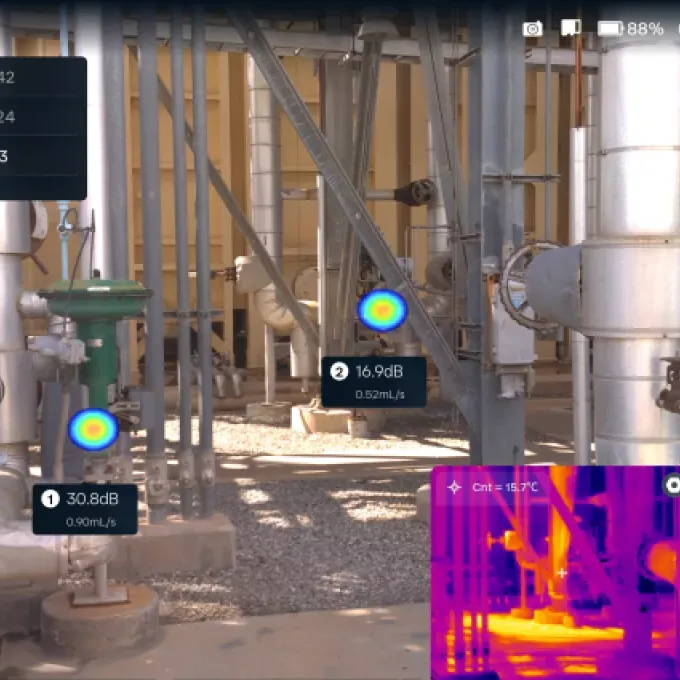
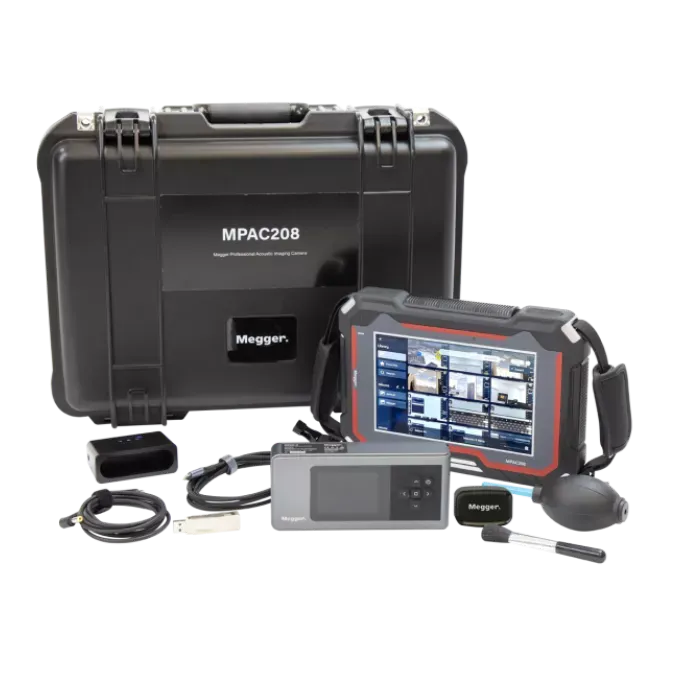
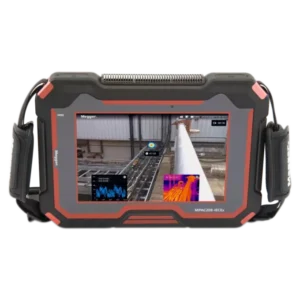
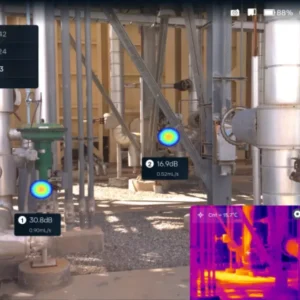
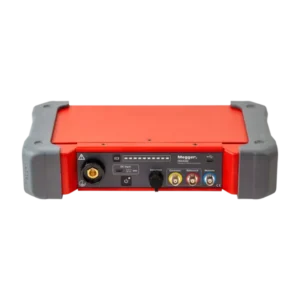
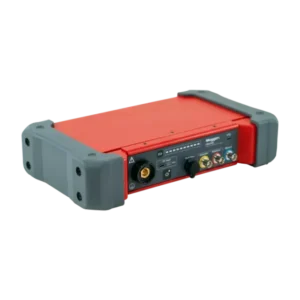
The Megger MPAC208 doesn’t just detect ultrasonic emissions — it maps them onto a live optical image so technicians can see exactly where faults are, at distances up to 200 metres. The instrument fuses data from a 208-channel MEMS (micro-electromechanical system) microphone array with a 13-megapixel optical camera, displaying real-time acoustic overlays on an 8-inch capacitive touchscreen. The result: a colour-coded “sound cloud” sitting precisely over the fault source, viewable in bright sunlight at 700 nits brightness.
This approach transforms how maintenance teams operate. Instead of methodical physical sweeps with contact instruments, a technician can stand at a safe distance from energised switchgear or elevated pipework and survey an entire zone in minutes. The MPAC208 finds what other instruments miss — and quantifies the cost of what it finds.
Three Diagnostic Modes, One Instrument
Gas Leak Detection
In Gas Leak Mode, the MPAC208 identifies pressurised and vacuum gas leaks by detecting the characteristic ultrasonic signature of escaping gas. The instrument doesn’t just locate the leak — it calculates the estimated leak rate in both volumetric and monetary terms, giving maintenance coordinators the economic justification needed to prioritise repairs. Minimum detectable leak rates are 0.0019 l/min at 2.5 m (5 bar) and 0.0022 l/min at 6.0 m (5 bar), making it sensitive enough to find even small defects before they compound. Reports can be generated in ISO 50001-compliant format, supporting energy management system documentation.
For Australian facilities running large compressed air networks — food manufacturing, mining processing plants, water treatment infrastructure — this translates directly to measurable energy savings and a fast return on instrument investment.
Partial Discharge Detection
In PD Mode, the MPAC208 captures ultrasonic emissions associated with partial discharge activity and presents Phase Resolved Partial Discharge (PRPD) visualisation alongside a PD count and Sound Pressure Level (SPL) reading. PRPD patterns allow experienced technicians to classify discharge type — surface tracking, internal void, corona — supporting informed decisions about asset condition and replacement timing.
This is particularly relevant for Australian electricity distributors and industrial operators managing ageing MV switchgear, ring main units, and high-voltage cable terminations. Non-contact inspection from safe standoff distances also directly supports compliance with AS 4836 (safe working on or near low voltage electrical installations) and good industry practice around live HV work.
Mechanical Fault Detection
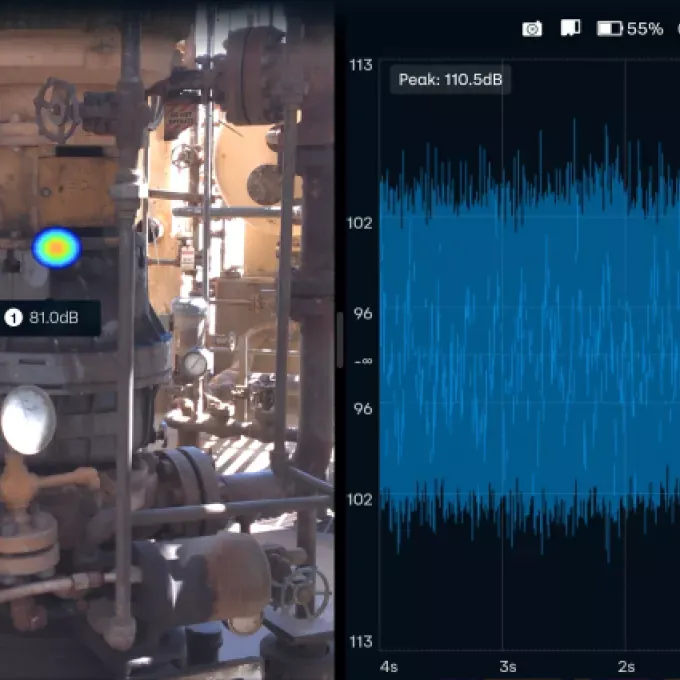
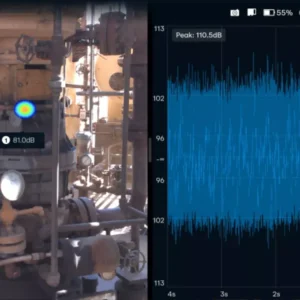
In Mechanical Mode, the MPAC208 detects ultrasonic signatures associated with bearing wear, cavitation, valve seat leakage, and vibration-related deterioration. Time-domain waveform display, frequency-domain analysis, and a real-time spectrogram provide three additional diagnostic parameters beyond basic SPL — making it possible to characterise the fault, not just detect it.
For reliability engineers managing large fleets of rotating equipment — motors, pumps, compressors, fans — this capability slots naturally into a predictive maintenance workflow, enabling condition-based interventions before unplanned downtime occurs.
Designed for Complex Real-World Environments
Industrial plants are noisy. Substations sit under energised busbars. Gas compression stations require intrinsically safe equipment. The MPAC208 was built to handle all of this.
The Focus function suppresses background acoustic interference, isolating the target signal in high-ambient-noise environments like compressor rooms or manufacturing floor areas. SoundScan™ directional guidance helps technicians track a leak or fault source even when it sits outside the camera’s optical field of view — an invaluable feature when conducting wide-area surveys of complex pipework or cable trays.
For operations in hazardous areas, the MPAC208-IECEx variant carries IECEx certification for Class 2 explosive gas and dust atmospheres (Group II 3G Ex ic IIC T5 Gc; Group II Category 3D Ex ic IIIC T100°C), making it suitable for use in gas processing, petrochemical, and mining environments where standard instruments are excluded.
Both variants weigh just 1.4 kg, carry an IP54 environmental rating, and are powered by two interchangeable smart Li-Ion battery packs, each delivering 5 hours of runtime. Swap batteries in the field without losing continuity of inspection.
Optional Thermal Correlation
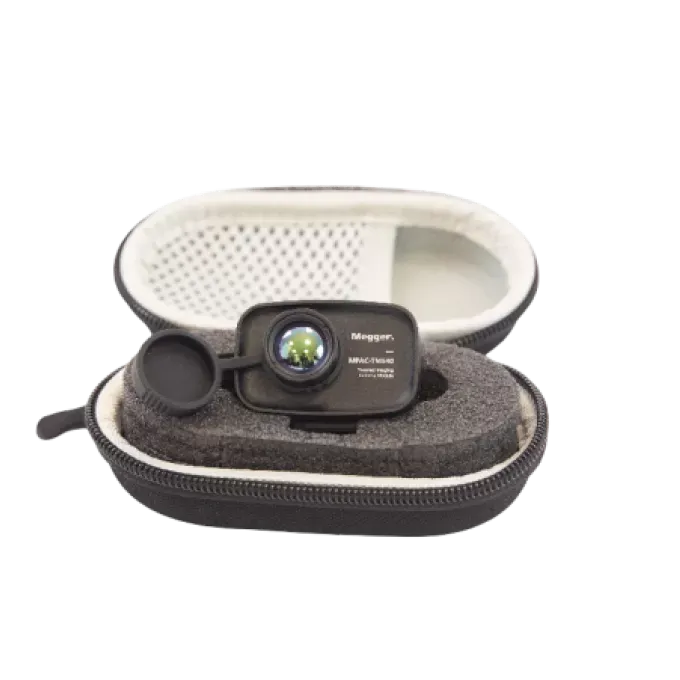
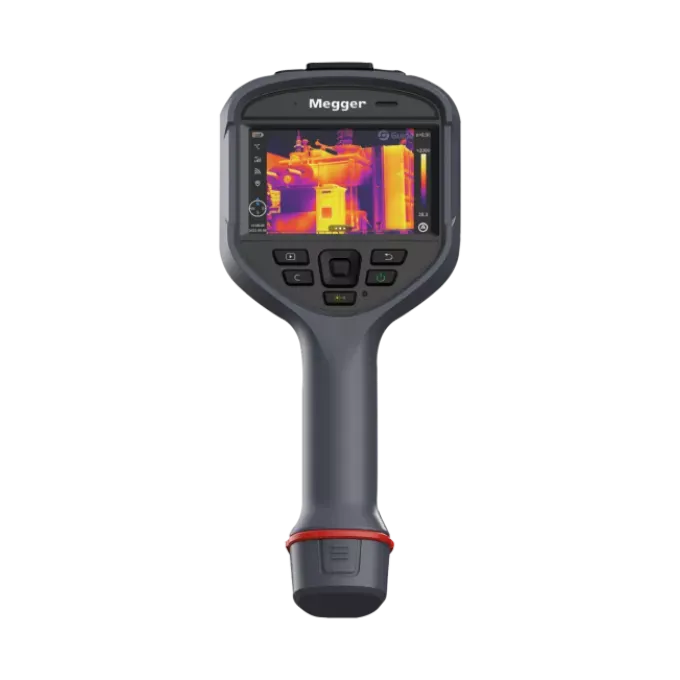
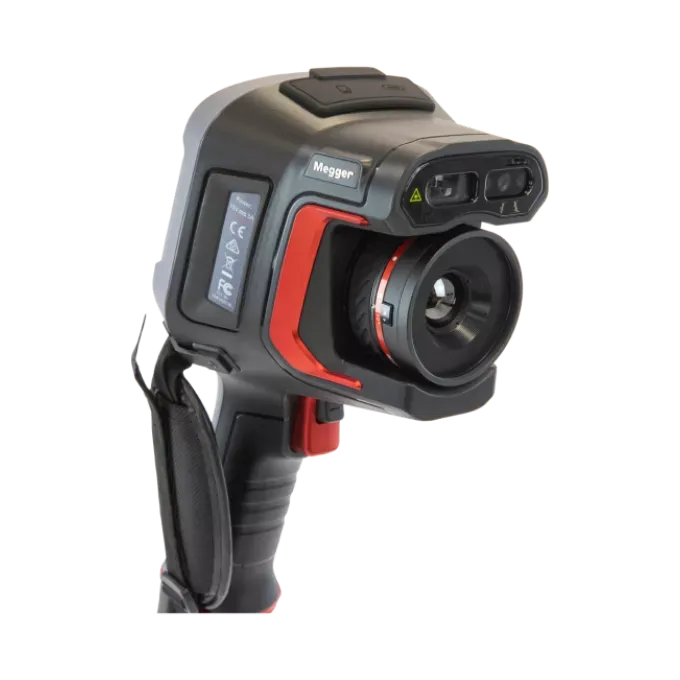
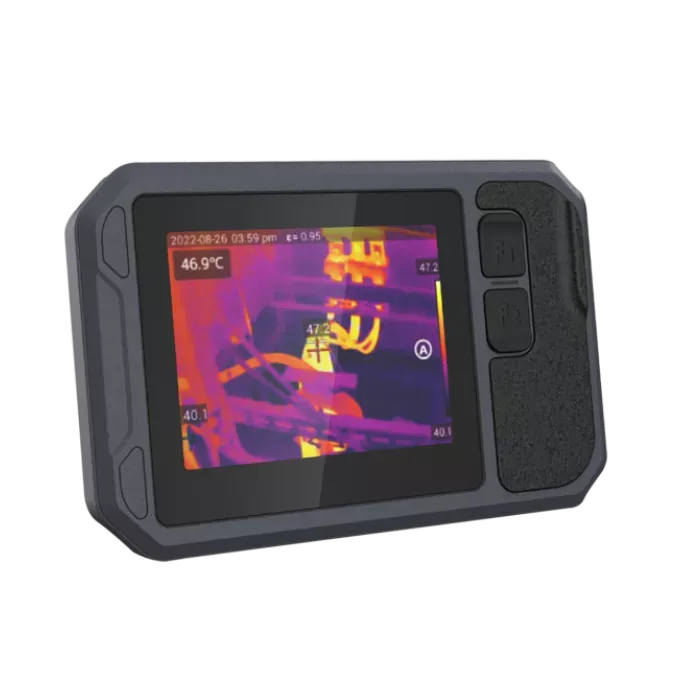
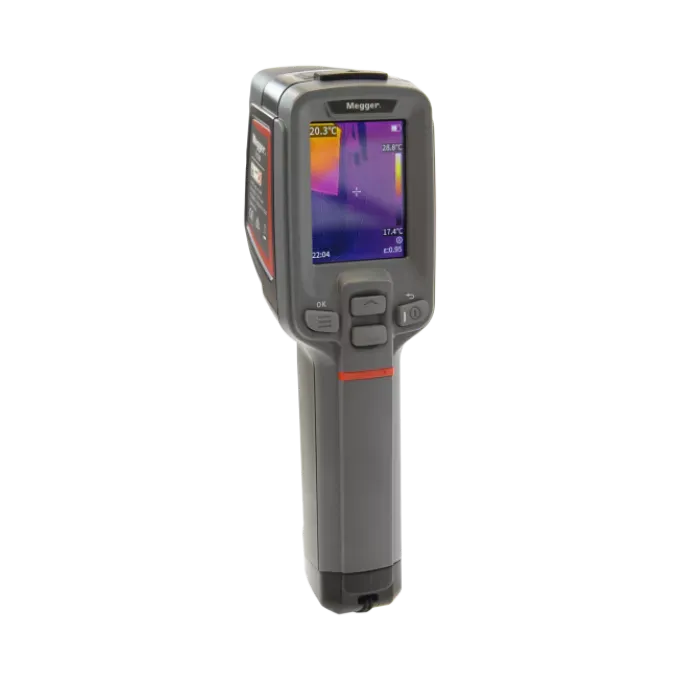
When simultaneous thermal and acoustic data is needed, the MPAC208 accepts two optional thermal imaging modules:
- MPAC-TM384: 384 × 288 resolution, 25 Hz frame rate
- MPAC-TM640: 640 × 512 resolution, 25 Hz frame rate
Both mount directly to the MPAC208 via USB-C 2, enabling side-by-side acoustic and thermal imagery on the same display. Where HV connections are running hot and producing PD simultaneously — a common precursor to insulation failure — the combined view collapses what would otherwise be a two-instrument, two-visit process into a single inspection pass.
Field Verification Built In
Calibration confidence matters. The optional MPAC-V acoustic camera verifier is a portable ultrasonic signal generator that connects to a dedicated verification routine built into the MPAC208 firmware. The routine automatically checks frequency response, SPL measurement accuracy, and the operational status of each individual MEMS microphone in the array. Megger recommends recalibration on a two-year cycle, extendable when regular MPAC-V verification is carried out. This is particularly relevant for facilities operating under NATA-accredited maintenance programmes or ISO 55000 asset management frameworks, where documented instrument verification is a compliance requirement.
Analysis Software Included
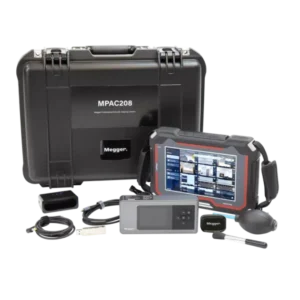
Every MPAC208 ships with Megger Analyst desktop software. The platform enables post-inspection review of acoustic images, thermal images, waveform data, spectrograms, and PRPD records — and generates professional inspection reports in gas/electricity and ISO 50001-compliant formats. Data transfers via Wi-Fi, USB-C flash drive, Bluetooth 5.2, or microSD card. Internal storage is 64 GB, expandable to 128 GB with an external card.
PRO Kit Option
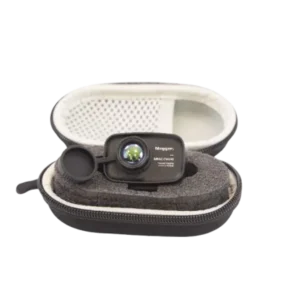
For teams wanting to commission the MPAC208 with full capability from day one, the MPAC208 PRO Kit (part 1016-922) bundles the acoustic camera with the MPAC-V verifier and the high-resolution MPAC-TM640 (640 × 512) thermal module at a cost-effective package price. An equivalent MPAC208-IECEx PRO Kit (part 1016-923) is available for hazardous-area applications.
TECHNICAL SPECIFICATIONS
| Specification | Value | Why It Matters |
|---|---|---|
| Microphone Array | 208-channel MEMS | More microphones = better spatial resolution and accuracy in source localisation; outperforms lower-count arrays in cluttered or noisy environments |
| Frequency Range | 2 kHz – 100 kHz | Wide bandwidth captures both low-frequency mechanical faults and high-frequency PD and leak events in a single scan |
| Detection Range | 0.5 m – 200 m | Safe standoff from energised HV equipment; enables large-area survey of substations and overhead lines |
| Min Leak Detection Rate | 0.0019 l/min @ 2.5 m / 5 bar | High sensitivity catches slow leaks before they become costly; suitable for fine leak surveys in precision compressed-air systems |
| SPL Range | 25.7 dBA – 132.5 dBA | Wide dynamic range handles both very quiet defects and high-intensity industrial environments |
| Optical Camera Resolution | 13 MP | High-resolution overlay image ensures precise fault localisation and clear inspection reports |
| Display | 8″ capacitive touchscreen, 1920 × 1200, 700 nits | Readable in direct Australian sunlight; touch interface simplifies mode and parameter adjustment |
| Field of View | 66° (H) × 52° (V) | Wide FOV enables efficient area surveys; 6× digital zoom for detailed close inspection |
| Battery Life | 10 hours (2 × 5 hr smart batteries) | Full shift coverage; hot-swappable packs eliminate charger downtime dependency |
| Weight | 1.4 kg | One-hand operable; suitable for extended overhead and elevated inspections |
| Environmental Rating | IP54 | Dust and splash resistant — suitable for industrial plant, outdoor switchyards, and wet-weather inspections |
| Internal Storage | 64 GB (+ 64 GB microSD) | Up to 128 GB total storage for large inspection datasets and video records |
| Data Transfer | Wi-Fi / USB-C / Bluetooth 5.2 / microSD | Flexible export to Analyst software or site reporting systems without cable dependency |
| Operating Temperature | −20 °C to +50 °C | Covers the full range of Australian climate zones, from alpine substations to tropical processing facilities |
| IECEx Variant | Group II 3G Ex ic IIC T5 Gc; Cat 3D Ex ic IIIC T100°C | Required for hazardous-area inspections in gas processing, petrochemical, or mining environments |
| Safety Standard | IEC 61010-1 | Baseline electrical safety compliance for handheld test instruments |
| EMC | IEC 61326-1 (Portable); CISPR 11 Group 1 Class A | Suitable for use near sensitive electrical equipment without causing interference |
| Drop/Shock | 1.2 m drop; 25 g shock | Survives realistic field handling — including minor falls from working height |
| Vibration | 2 g per IEC 60068-2-6 | Maintains measurement integrity in vibrating plant environments |
| Calibration Interval | 2 years (extendable with MPAC-V verification) | Supports NATA maintenance programmes and AS ISO 55000 asset management documentation |
| Software Reports | Gas/Electricity; ISO 50001-compliant | Ready-made report formats for energy audits and management system compliance |
| Warranty | 2 years | Standard Megger warranty coverage |
| Part Numbers | MPAC208: 1016-917 / MPAC208-IECEx: 1016-918 / PRO Kit: 1016-922 / IECEx PRO Kit: 1016-923 | Multiple configurations available to match application and budget |
Q: What is an acoustic imaging camera used for in industrial maintenance?
An acoustic imaging camera detects and visualises ultrasonic sound emissions that are invisible to the human ear. In industrial maintenance, it is used to locate compressed air and gas leaks, identify partial discharge (PD) in high-voltage electrical equipment, and detect early-stage mechanical faults such as bearing wear and valve leakage. The camera overlays a colour-coded “sound map” onto a live optical image, showing technicians exactly where faults are located — from distances up to 200 metres — without interrupting operations or making contact with equipment. The Megger MPAC208 is a professional acoustic imaging camera used in this way across utilities, manufacturing, mining, and renewables.
Q: How does the Megger MPAC208 detect partial discharge?
The Megger MPAC208 detects partial discharge (PD) by sensing the ultrasonic emissions that PD events generate in high-voltage electrical equipment such as switchgear, cable terminations, and busbars. In PD Mode, the camera’s 208-channel MEMS microphone array captures these emissions and displays the source location as an acoustic overlay on the optical image. It also records Phase Resolved Partial Discharge (PRPD) patterns, which allow technicians to classify the type of discharge — corona, surface tracking, or internal void — supporting informed asset condition assessments without any physical contact with energised equipment.
Q: Can an acoustic camera quantify gas leak costs?
Yes. The Megger MPAC208 includes built-in leak quantification that automatically estimates leak rate in both volumetric (litres per minute) and monetary terms. It calculates cost impact based on the detected sound signature and can produce ISO 50001-compliant energy audit reports. This allows maintenance managers to rank leak repairs by economic priority — targeting the highest-cost leaks first — rather than simply listing leak locations. The minimum detectable leak rate is 0.0019 l/min at 2.5 m (5 bar), making it sensitive enough to identify even small defects before they accumulate significant cost.
Q: What is the difference between the MPAC208 and MPAC208-IECEx?
The Megger MPAC208 and MPAC208-IECEx share identical acoustic performance, operating modes, and specifications. The IECEx variant adds certification for use in Class 2 explosive gas and dust atmospheres — Group II 3G Ex ic IIC T5 Gc and Group II Category 3D Ex ic IIIC T100°C per conformity certificate IECEx TUR 24.0052X. This makes the MPAC208-IECEx suitable for inspection work in gas processing, petrochemical, chemical manufacturing, and underground mining environments where Zone 2/21 area classification applies. The standard MPAC208 is not approved for use in hazardous areas.
Q: How far away can the MPAC208 detect a gas leak?
The Megger MPAC208 has a detection range of 0.5 metres to 200 metres. For compressed air leaks, the practical detection range depends on leak size and ambient noise levels. Under typical conditions, the minimum detectable leak rate is 0.0019 l/min at 2.5 m (5 bar) and 0.0022 l/min at 6.0 m (5 bar). The 200-metre capability is particularly valuable for safe standoff inspection of overhead lines, elevated pipework, and energised HV switchgear where physical proximity is restricted.
Q: Does the MPAC208 need a thermal camera module to work?
No. The MPAC208 is a fully functional acoustic imaging camera without any thermal module. All three operating modes — Gas Leak, Partial Discharge, and Mechanical — operate using the acoustic array and optical camera only. The optional MPAC-TM384 (384 × 288) and MPAC-TM640 (640 × 512) thermal modules attach via USB-C 2 and enable side-by-side thermal and acoustic imagery for root-cause correlation where heat and acoustic anomalies co-occur. The PRO Kit bundles the camera with the MPAC-V verifier and MPAC-TM640 module for teams wanting combined capability.
Q: What is SoundScan™ on the Megger MPAC208?
SoundScan™ is a proprietary directional guidance feature built into the Megger MPAC208. When a leak or fault source is generating ultrasonic emissions outside the camera’s optical field of view, SoundScan™ provides on-screen directional cues to guide the operator toward the source. This is particularly useful during initial wide-area surveys of large plants or pipework runs where the exact fault location is unknown — it helps technicians navigate to the source efficiently without needing to visually sweep an entire area.




Reviews
There are no reviews yet.