
 Promotions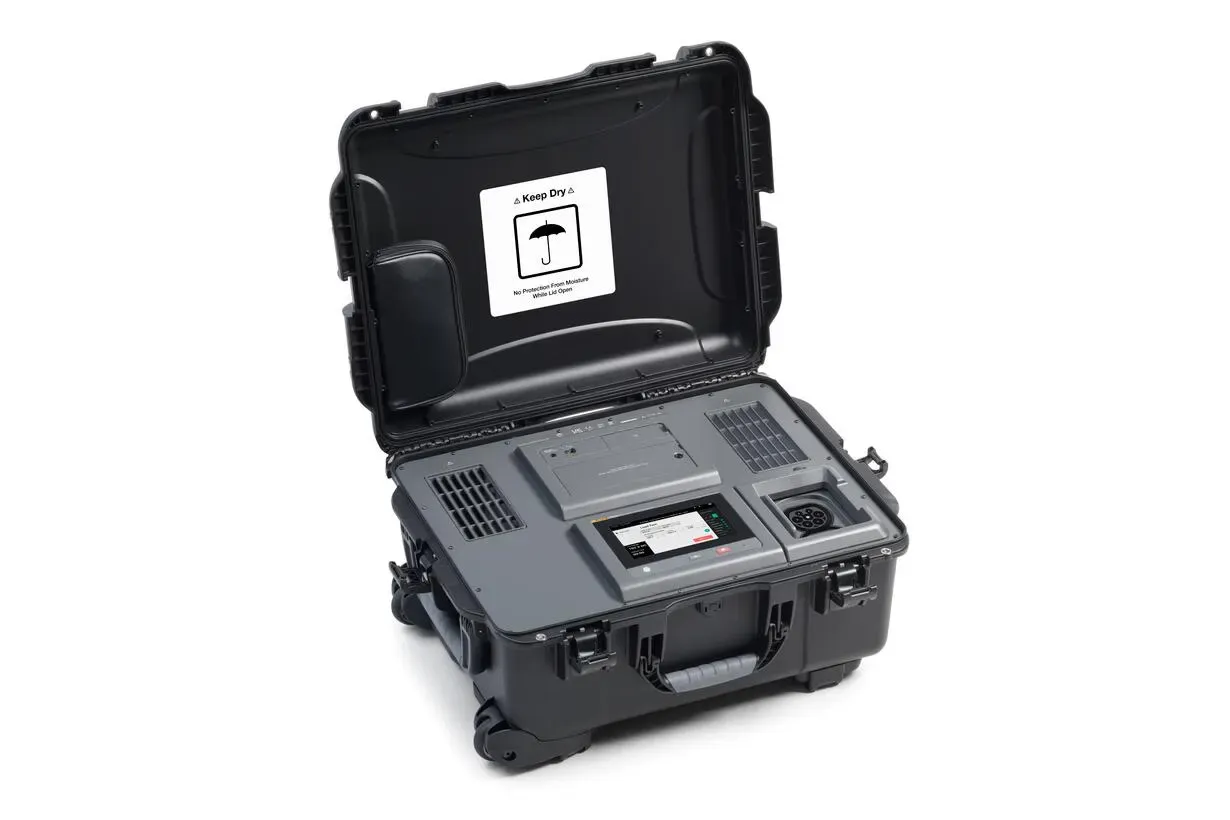




The Growing Challenge of Fast DC EV Charger Verification in Australia
Australia’s EV charging network is expanding rapidly. From highway corridors to commercial car parks and fleet depots, fast DC charging stations are being installed at pace — and every one of those chargers needs to be commissioned, periodically maintained, and fault-diagnosed when issues arise.
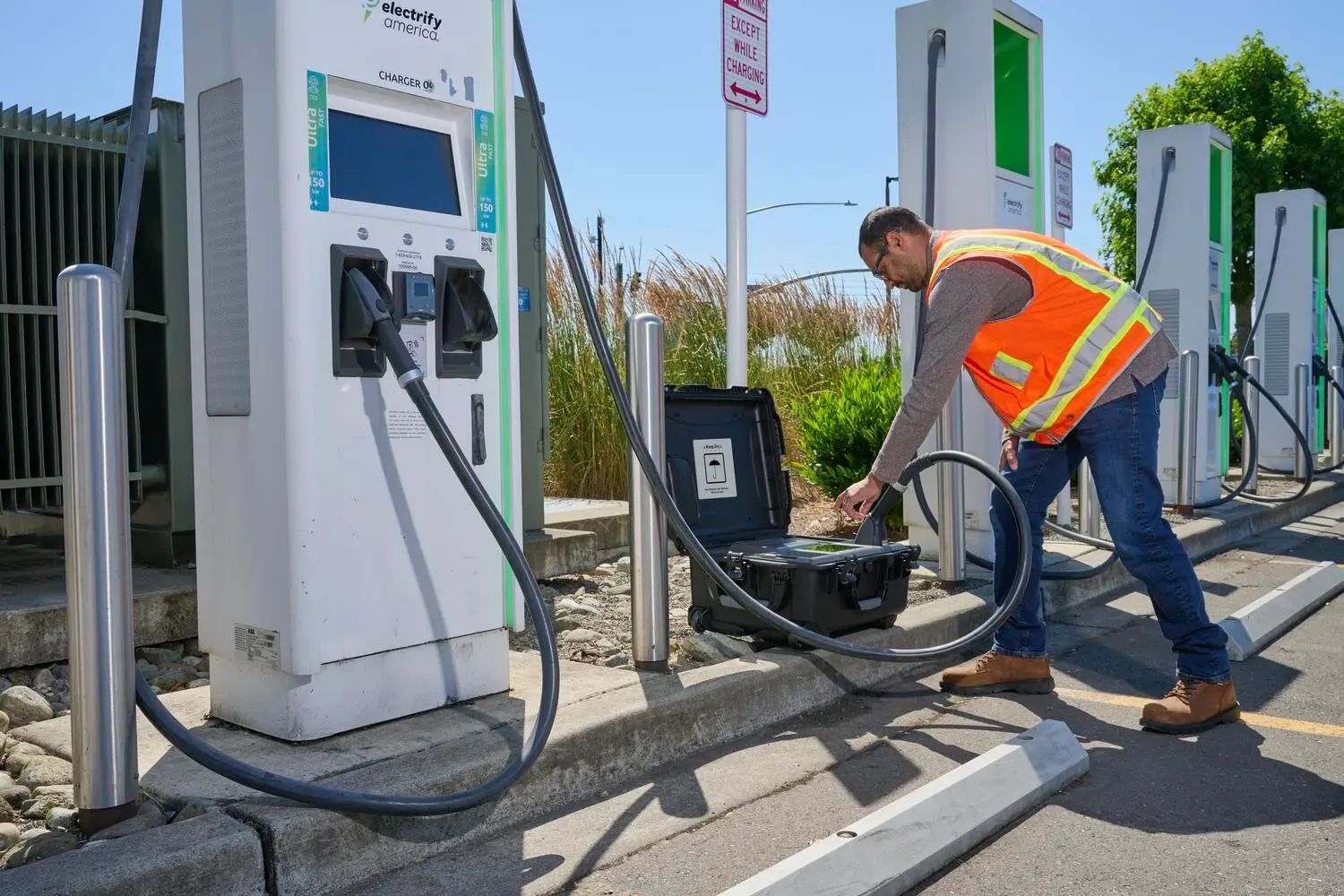
Here’s the problem: traditional testing approaches rely on connecting an actual electric vehicle to trigger charger operation. No EV available? No test. That’s a real constraint when you’re a service contractor arriving at a new commercial installation, a fleet operator running scheduled maintenance on 20 bays, or an electrical contractor troubleshooting a charger fault at a remote highway rest stop.
Add to that the multi-layer complexity of modern DC fast chargers — which must be verified for electrical safety (insulation integrity, continuity, residual voltage), communication protocol compliance (CCS, DIN SPEC 70121, ISO 15118), and actual power delivery performance — and it becomes clear why purpose-built test equipment isn’t a luxury. It’s a necessity.
The Fluke FEV500 Fast DC EV Charging Station Analyzer was purpose-engineered to solve exactly this challenge.
One Analyzer. Complete Fast DC Charger Verification.
The FEV500 brings together every test a technician needs to fully commission or diagnose a Fast DC EV charging station — and does it without requiring an EV on site.
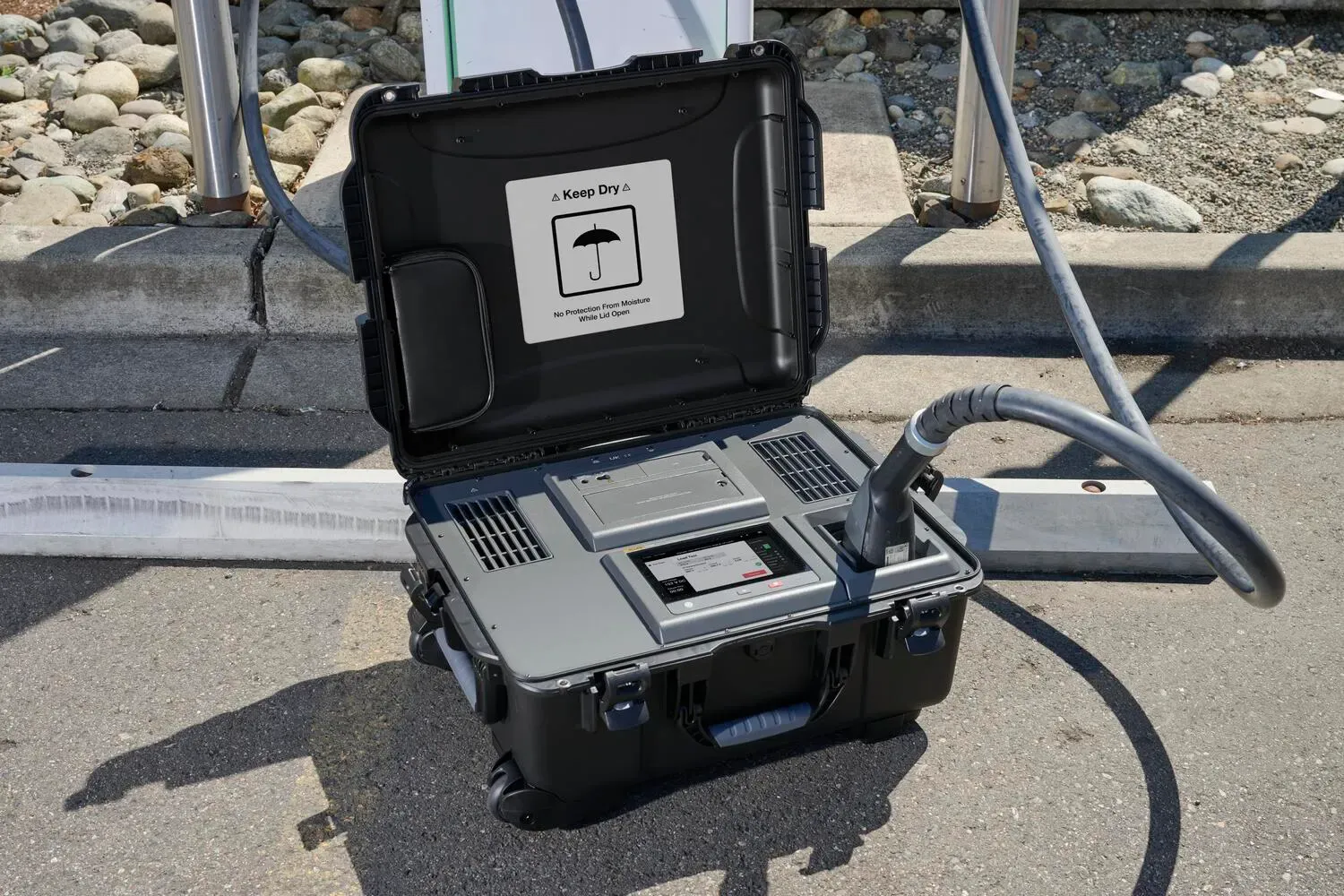
Rather than relying on a vehicle to initiate the charging protocol, the FEV500 simulates the EV’s communication stack. It acts as a virtual vehicle — initiating handshake communication, verifying charger response, and drawing a controlled load of up to 2.4 kW through the CCS connector. From a single connection, you get a full safety and performance assessment.
The workflow is built around a guided Autotest sequence that walks technicians through the full test suite step by step, delivering unambiguous PASS/FAIL results at the end. This removes the need for specialist knowledge at every step, reduces human error, and ensures every site visit is consistent and documentable.
What the FEV500 Actually Tests
The Autotest sequence covers six critical verification areas performed in sequence through the CCS connector:
CCS Low-Level Communication and SLAC Test Validates the charger’s ability to initiate and complete the communication handshake required before charging begins. Tests CP (Control Pilot) voltage levels, frequency, and duty cycle across states A through D/E, and verifies SLAC (Signal Level Attenuation Characterisation) performance used in PLC-based ISO 15118 communication. Compatible with both DIN SPEC 70121 and ISO 15118 protocols.
Continuity Test (RLO) Tests the low-resistance continuity of the protective earth connection at the CCS socket against the PE conductor. Uses a DC test with alternating polarity and up to 10 A test current, with live circuit detection that inhibits testing if voltage exceeds 60 V — keeping the technician safe. Compliant with IEC 61557-4.
Insulation Resistance Test (RISO) Measures insulation resistance from DC+ to PE and DC- to PE with a selectable test voltage of 500 V or 1000 V depending on the EVSE’s maximum output voltage. Identifies degraded insulation that could present a shock hazard or indicate wiring damage. Compliant with IEC 61557-2.
Load Test (Cable Check + Power Delivery) Applies a real 2 kW+ load (up to 3.75 kW measurement range) via the FEV500’s internal load bank, measuring actual DC voltage (up to 1000 V), current (up to 10 A), and power output. Also performs a cable check voltage measurement at the CCS socket before load application. This verifies that the charger is delivering real power within specification — something a communication test alone cannot confirm.
IMD Test (Insulation Monitoring Device) Validates correct operation of the charger’s built-in Insulation Monitoring Device, applying test resistors to simulate both “no-trip” and “trip” conditions. Confirms the IMD is actively monitoring isolation and will respond correctly to a fault. Compliant with IEC 61557-8 / IEC 61557-18.
Residual Voltage Test Confirms that residual voltage at the CCS socket has safely discharged to safe levels after the charging session, protecting both users and downstream service personnel.
Built for Australian Field Conditions
The FEV500 is designed to survive — and perform — in the environments where EV charger technicians actually work.
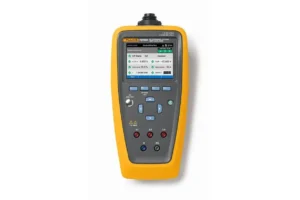
The IP54-rated rugged hardcase (lid closed) handles dust and water splash on construction sites, outdoor installations, and loading docks. The 7-inch TFT touchscreen with up to 1,700 cd/m² brightness and an ambient light sensor means readings are clearly visible even in direct sunlight — critical when you’re working outdoors in Australian summer conditions. Glove-compatible capacitive touch means you don’t need to remove PPE to operate the instrument.
The removable lithium-ion battery delivers up to 10 hours of runtime, and uniquely, the battery partially recharges during each load test — extending field use between charges. Recharge from flat takes approximately 3 hours via a USB-C PD 65 W adapter. The battery maintains its charge for up to 6 months in storage, making it ready to go even after extended periods between jobs.
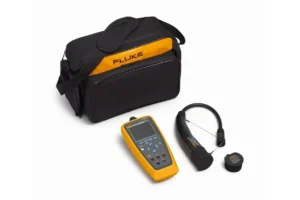
The wheeled hardcase design means the FEV500 can be moved site-to-site without lifting strain, with a transport footprint of 65 × 50.8 × 30 cm and a packed weight of 26 kg.
Integrated Wi-Fi (802.11b/g/n) and Bluetooth 5.2 support wireless data transfer and connectivity, while a built-in GNSS receiver provides precise time synchronisation for accurate test record timestamps.
Reporting That Saves Hours
One of the biggest time drains in EV charging station maintenance isn’t the testing itself — it’s the documentation.
The FEV500 eliminates manual data entry entirely. All test results are captured automatically and transferred via USB-C to Fluke TruTest™ software, which generates professional, formatted compliance reports ready for client handover or maintenance records. For fleet operators and charging network managers who need to demonstrate charger health across multiple sites, this transforms what used to be a manual, error-prone process into a streamlined, repeatable workflow.
Who the FEV500 Is Built For
EV Charging Infrastructure Contractors Commission new DC fast charger installations to a documented, repeatable standard. Generate site acceptance reports on the day without waiting to source a test vehicle.
Fleet Operators and Depot Maintenance Teams Run scheduled preventive maintenance across entire charging bays quickly and consistently. Identify degraded insulation or IMD faults before they cause vehicle downtime or create safety incidents.
Highway and Public Network Operators Verify charger performance at remote sites without coordinating EV test vehicles. Diagnose faults faster and get chargers back online sooner.
Electrical Contractors and Switchboard Builders Include DC fast charger commissioning testing in your service offering with a professional-grade instrument that produces compliance documentation.
Why Choose Us for Your Fluke FEV500
We’re Australian-based test and measurement specialists with hands-on experience in electrical safety testing equipment and the compliance requirements that matter to Australian electricians, contractors, and facility managers. When you order the Fluke FEV500 through us, you’re buying from a team that understands how the instrument will be used in the field — not a general electronics retailer.
We offer NATA-traceable calibration services for your test and measurement fleet, meaning your FEV500 can be calibrated and returned with full traceability documentation. Our team can advise on test procedures, reporting requirements, and accessories to build out a complete EV charging station testing capability.
The FEV500 carries Fluke’s standard 2-year warranty on the main unit and 1 year on the battery and accessories, backed by Fluke’s global service and support network. Optional Fluke Premium Care plans (1-year or 3-year) are available for extended coverage including calibration and damage protection.
TECHNICAL SPECIFICATIONS
| Specification | Value | Why It Matters |
|---|---|---|
| Autotest Scope | CCS Communication (SLAC), Continuity (RLO), Insulation Resistance (RISO), Load Test, IMD Test, Residual Voltage | Complete commissioning in one guided sequence — no test step missed |
| Load Test Power | Up to 3.75 kW measurement range; 2.4 kW simulated EV load | Verifies the charger is actually delivering power, not just communicating |
| DC Voltage Range | Up to 1000 V | Covers all current Fast DC EVSE ratings including 800 V platforms |
| DC Current Range | Up to 10 A | Sufficient for safe load testing without requiring a full-vehicle draw |
| Insulation Test Voltage | 500 V or 1000 V (auto-selected based on EVSE max voltage) | Matches test voltage to equipment rating for accurate results |
| RISO Accuracy | ±(5% rdg + 2 digit) | Reliable identification of insulation degradation |
| CP Voltage Accuracy | ±(0.4% rdg + 2 digit) | Precise control pilot measurement for protocol compliance verification |
| Communication Protocols | DIN SPEC 70121, ISO 15118 | Covers the full range of CCS-compatible charger implementations |
| Display | 7-in TFT, 1024×600, up to 1,700 cd/m², glove-operable | Readable in full sun; no need to remove PPE to operate |
| Battery Runtime | Up to 10 hours (recharges during test) | Full day in the field without needing mains access |
| Charge Time | ~3 hours via USB-C PD 65 W | Quick overnight turnaround between site visits |
| Wireless | Wi-Fi 802.11b/g/n + Bluetooth 5.2 | Flexible data transfer options in the field |
| GNSS | Integrated receiver | Accurate timestamp on every test record |
| Operating Temperature | -20 °C to +50 °C | Safe to use in Australian summer outdoor environments |
| Ingress Protection | IP54 (case closed) | Dust and splash resistant for outdoor and construction site use |
| Drop Rating | 0.5 m | Withstands accidental drops during transport |
| Weight | 26 kg (wheeled hardcase) | Mobile without lifting strain; rolls to the charger bay |
| Dimensions | 65 × 50.8 × 30 cm | Fits in the back of a service vehicle |
| Safety Standards | IEC 61010-1, IEC 61010-2-034 | Built and certified to international electrical safety standards |
| IMD Standard | IEC 61557-8 / IEC 61557-18 | Recognised standard for insulation monitoring device verification |
| Continuity Standard | IEC 61557-4 | Recognised standard for low-resistance continuity testing |
| Insulation Standard | IEC 61557-2 | Recognised standard for insulation resistance measurement |
| Warranty | 2 years (unit); 1 year (battery + accessories) | Industry-standard Fluke coverage with Premium Care options available |
APPLICATIONS & USE CASES
EV Charging Station Commissioning
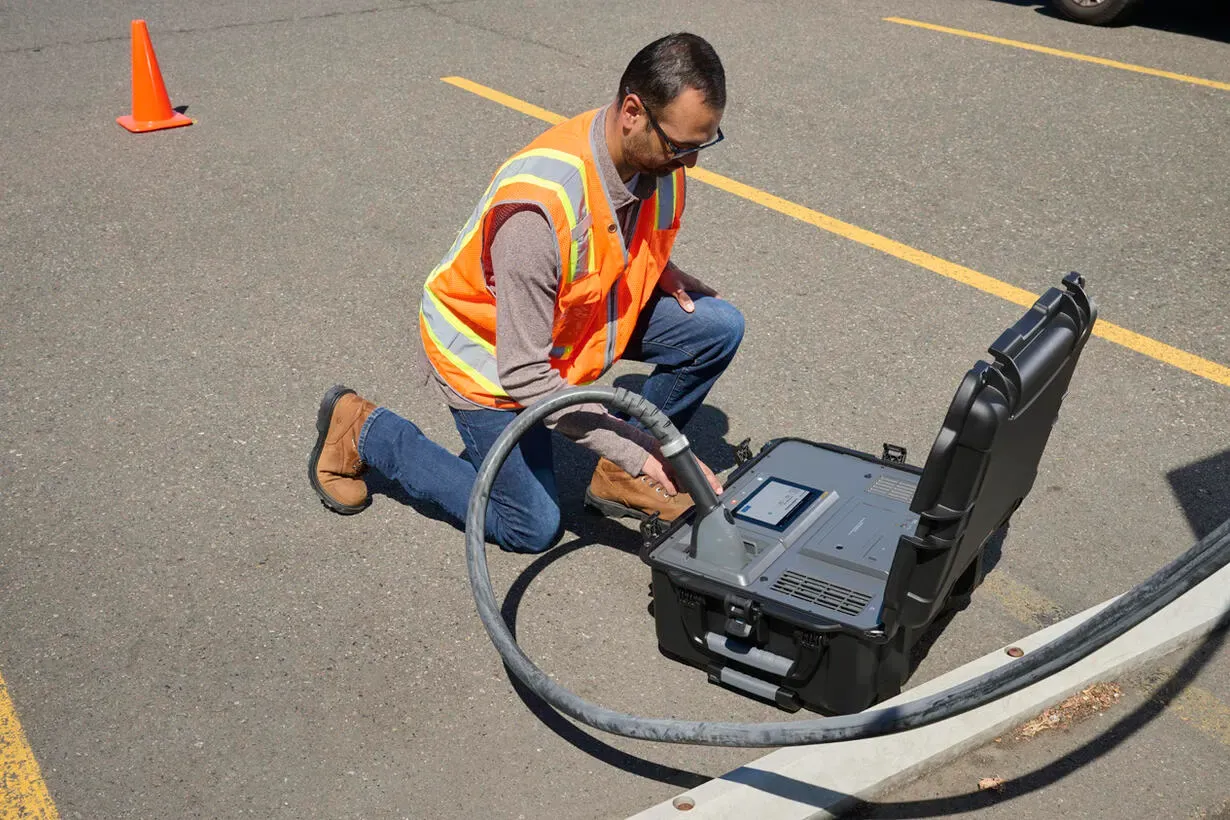
When a new Fast DC charger is installed — whether a 50 kW unit at a service station or a 150 kW high-power charger at a commercial hub — it needs to be formally commissioned before going into service. The FEV500 performs every required test from a single CCS connection and generates the documentation to accompany the handover.
Periodic Preventive Maintenance
Charger networks scheduled for regular inspection benefit from the FEV500’s consistent, repeatable Autotest workflow. Every bay gets the same test, same criteria, same format — making it easy to compare results over time and catch degradation before it becomes a breakdown.
Fault Diagnosis
When a charger stops working or an EV driver reports an issue, the FEV500 isolates the fault quickly. Is it a communication failure? Insulation degradation? An IMD that’s tripped? The step-by-step test sequence narrows the cause without trial-and-error.
Fleet and Depot Charging Infrastructure
Corporate fleets, logistics operators, and bus depots with large numbers of DC fast chargers need a systematic way to maintain them. The FEV500’s reporting workflow — auto-capture to TruTest™ — scales to multi-bay environments where manual recording isn’t practical.
Remote and Highway Site Testing
In locations where arranging a test vehicle is logistically complex, the FEV500’s self-contained operation is decisive. Drive to site, connect, test, report — no second vehicle, no scheduling coordination.
Q: What does the Fluke FEV500 do?
The Fluke FEV500 is a portable analyzer used to test, commission, and maintain Fast DC EV charging stations without requiring an electric vehicle on site. It simulates an EV’s communication and electrical load through the CCS connector, running a guided Autotest sequence that covers safety, communication, insulation, power delivery, and IMD verification. It generates documented PASS/FAIL results and integrates with TruTest™ software for automated compliance reporting.
Q: Can you test a DC EV charger without a car?
Yes. The Fluke FEV500 allows technicians to fully test a Fast DC EV charging station without connecting an electric vehicle. The instrument acts as a virtual EV, initiating the charging communication protocol, simulating a load, and performing a complete suite of electrical safety and performance checks through the CCS connector. This makes field commissioning and maintenance practical regardless of vehicle availability.
Q: What tests does the Fluke FEV500 perform?
The FEV500 performs six tests in its guided Autotest sequence: (1) CCS low-level communication and SLAC test; (2) continuity (low-resistance) test to PE; (3) insulation resistance test at 500 V or 1000 V; (4) load test measuring actual DC voltage, current, and power output; (5) insulation monitoring device (IMD) verification; and (6) residual voltage test. These collectively cover the electrical safety, communication protocol, and performance verification requirements for a Fast DC charging station.
Q: What is the Fluke FEV500 battery life?
The Fluke FEV500 operates for up to 10 hours on a single charge of its removable lithium-ion battery (10.8 V, 6.8 Ah). The battery partially recharges during each load test, extending practical runtime. Full recharge takes approximately 3 hours via a USB-C PD 65 W charger. The battery retains its charge for up to 6 months in storage and is customer-replaceable.
Q: What communication protocols does the Fluke FEV500 support?
The FEV500 supports DIN SPEC 70121 and ISO 15118, the two principal communication protocols used in CCS-based Fast DC EV charging systems. It measures and validates the Control Pilot (CP) signal — including voltage high/low, frequency, and duty cycle — and tests SLAC (Signal Level Attenuation Characterisation) used in ISO 15118 power line communication.



Reviews
There are no reviews yet.