 Promotions


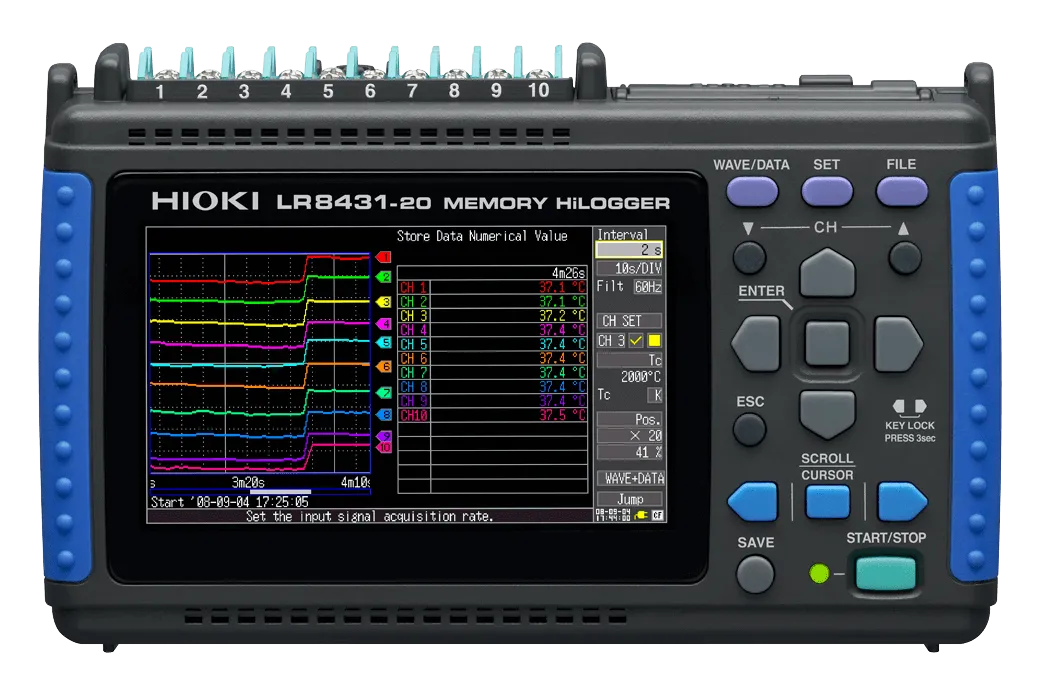
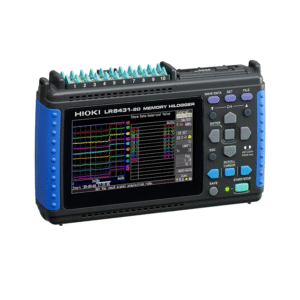
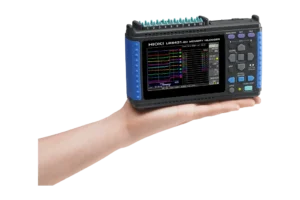
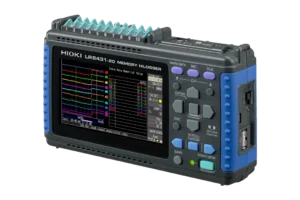
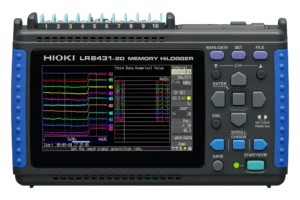




HIOKI LR8431-20 Data Logger
Modern electrical systems are becoming increasingly complex. Whether you’re diagnosing a reluctant compressor in an HVAC unit, evaluating an electric vehicle motor, or monitoring temperature distribution across multiple points in a facility, single-point measurements simply don’t tell the full story. You need simultaneous data capture from multiple locations to identify performance bottlenecks, verify efficiency claims, and troubleshoot intermittent faults that refuse to show up on a standard multimeter.
The challenge is that traditional single-channel loggers force you to make multiple passes, potentially missing transient events or introducing measurement inconsistencies. Modern testing demands the ability to see what’s really happening across your entire system in one decisive test run.
The 10-millisecond sampling speed across all 10 channels simultaneously means you’re capturing waveforms with genuine temporal fidelity. When diagnosing motor performance during inrush current conditions, evaluating power quality distortions, or measuring rapid temperature fluctuations in HVAC equipment, that 10ms resolution reveals events that slower loggers simply miss. You’re seeing the actual behavior of your equipment, not a smoothed approximation.
Complete channel isolation is equally critical. The semiconductor relay isolation architecture eliminates inter-channel interference and prevents dangerous ground-loop problems when you’re measuring both voltage and temperature signals simultaneously. This isolation also protects against earth faults—a significant safety advantage when testing in Australian industrial environments where grounding conditions can be unpredictable.
Data storage flexibility reflects real-world testing realities. For quick diagnostics requiring 30 minutes to a few hours of continuous monitoring, the internal 3.5-megaword memory capacity handles everything you need. But when you’re conducting long-term efficiency studies—evaluating an air conditioning system’s 24-hour performance or monitoring a solar installation’s temperature behavior across seasonal extremes—the CF card support provides industrial-grade storage reliability.
What sets the LR8431-20 apart is the ability to swap storage media without stopping your test. Imagine monitoring HVAC performance through a complete day-night cycle. Rather than stopping the test or losing continuity, you simply swap out a full CF card for a fresh one, maintaining continuous data acquisition while gaining access to recorded data for immediate preliminary analysis. USB flash drive support ensures your data transfers quickly to your laptop or office computer for detailed analysis and reporting.
The 10-channel architecture supports diverse measurement types, making the LR8431-20 genuinely flexible across multiple trade applications.
Voltage measurements span from 100mV to 60V across six selectable ranges, with 5-microvolt resolution at lower ranges. This precision suits everything from low-voltage control circuit diagnostics to mains supply quality assessment. The digital 50/60 Hz filter option eliminates power-line noise contamination, essential for clean readings in Australian industrial environments with substantial harmonic distortion.
Thermocouple support covers -200°C to 1800°C with seven thermocouple types (K, J, E, T, N, R, S, B) and automatic reference junction compensation. You’re measuring HVAC ductwork temperature, motor winding conditions, industrial oven performance, or battery thermal behavior—the LR8431-20 handles it with professional accuracy. The 0.1°C resolution captures meaningful variations in system behavior.
Pulse input channels (four dedicated channels with shared ground) count rotation speeds, track mechanical tachometer signals, or monitor pulse-based sensors. Whether logging compressor cycles in refrigeration plant testing or measuring pump rotation in solar thermal systems, pulse measurements integrate naturally into your multi-point test strategy.
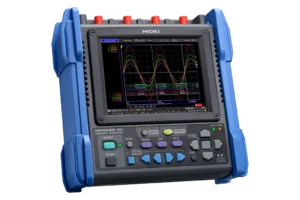
The 4.3-inch color LCD screen isn’t just for show—it’s genuinely useful in the field. Real-time waveform display allows immediate assessment of whether your test is capturing what you need, preventing wasted travel time back to the workshop only to discover setup issues. The bright display performs well even under Australian sunshine, a significant advantage for outdoor solar and climate control testing.
Compact dimensions (176mm × 101mm × 41mm) and 550-gram weight mean this logger fits genuinely in your test kit alongside other essentials. The included AC adapter handles 100-240V, so you’re never stranded without power, and optional battery pack support (2.5 hours continuous use) provides flexibility for remote site testing.
The included Logger Utility software transforms data into meaningful analysis on your office computer—numerical calculations, waveform visualization, and straightforward export options for client reporting. No learning curve, no compatibility confusion.
The HIOKI LR8431-20’s complete channel isolation, accurate reference junction compensation for thermocouples, and noise-resistant measurement circuitry ensure your readings reflect genuine system behavior, not instrument artifacts.
HVAC System Efficiency Testing: Measure supply and return temperatures across multiple ductwork points simultaneously, log compressor discharge temperature and motor current, monitor humidity fluctuations. Document actual system performance for warranty claims, efficiency disputes, and retrofit planning.
Electric & Hybrid Vehicle Development: Log motor winding temperature, inverter voltage output, battery current, and mechanical output speed during acceleration events. Capture the transient behavior that validates or challenges performance claims.
Industrial Motor Diagnostics: Record voltage across all three phases plus load current and bearing temperature. Identify phase imbalance, voltage distortion, and thermal stress patterns that predict failure.
Solar Thermal System Monitoring: Log collector outlet temperature, storage tank temperature at multiple depths, pump run time (via pulse counting), and flow sensor signals. Validate system efficiency and identify maintenance needs.
Power Quality Audits: Simultaneous voltage measurement across multiple circuits with 10ms resolution reveals harmonic distortion, voltage sags, and switching transients invisible to standard meters.
Equipment Performance Validation: Any industrial equipment requiring multi-point simultaneous testing—refrigeration plant commissioning, ventilation system balance, manufacturing process monitoring.