 Promotions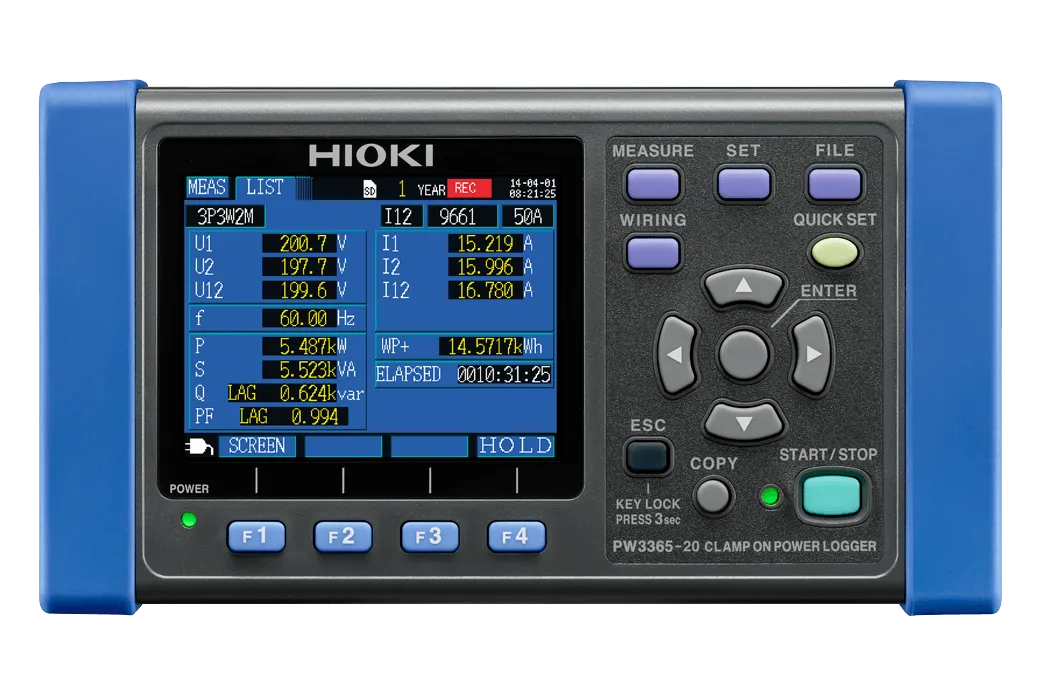
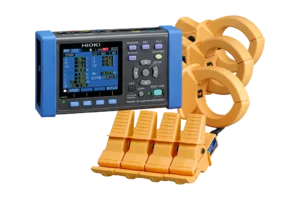



Stop Risking Short Circuits Every Time You Test Live Circuits
If you’ve ever felt that moment of tension when connecting test leads to live terminals, you know the drill. One slip, one accidental contact between probes, and you’re dealing with an arc flash, a blown circuit, or worse. For electrical contractors, facility managers, and energy auditors working on energized systems, this risk comes with the territory—until now.
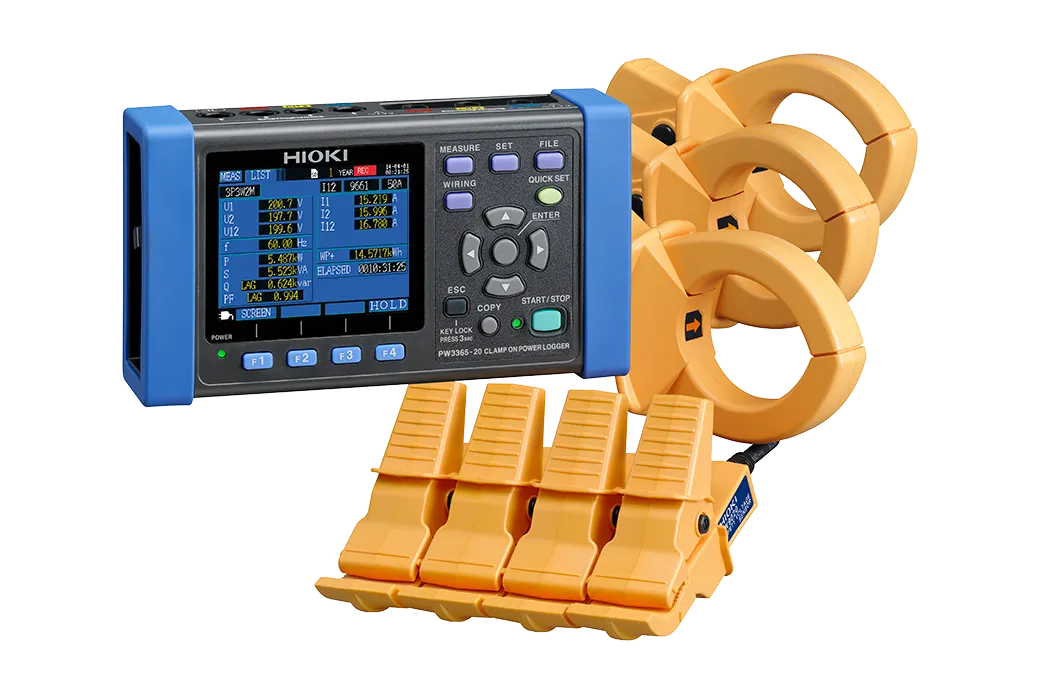
The HIOKI PW3365 Clamp-On Power Logger fundamentally changes how Australian professionals approach power measurement. As the world’s first power logger with completely non-metallic contact voltage sensors, this instrument eliminates the physical risk that’s plagued power testing since day one. No exposed metal contacts. No direct terminal connections. No accidental short circuits.
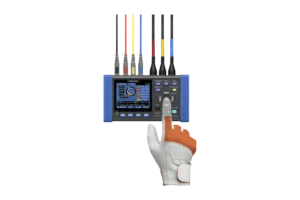
Instead of fumbling with traditional voltage probes that need precise terminal placement, the PW3365 uses innovative fully-insulated voltage clips that attach anywhere along insulated cables or busbars. Clip around the wire jacket, not onto exposed metal—it’s that straightforward. This breakthrough design means you can measure 3-phase power systems while circuits remain energized and covered, without ever removing terminal guards or exposing live parts.
Real-World Problem: Why Traditional Power Testing Creates Dangerous Situations
Every sparky and facility tech knows the scenario: you need to log power consumption on a 3-phase distribution board to identify energy waste or verify equipment performance. Traditional power analyzers require you to:
- Isolate the circuit or work live with exposed terminals
- Carefully position voltage probes on metal contact points
- Maintain safe clearances while managing multiple leads
- Risk short circuits if probes slip or make unintended contact
- Navigate around terminal covers that block access
This process isn’t just time-consuming—it’s genuinely hazardous. Australian electrical safety regulations (AS/NZS 3000:2018) emphasize risk elimination wherever possible. Working on live circuits with traditional test equipment places technicians in harm’s way for routine measurements. Facility managers conducting energy audits face tough decisions: shut down critical equipment for testing, or accept the risks of live testing.
The PW3365 solves this by making voltage measurement genuinely non-contact. The fully-covered PW9020 voltage sensors clip around insulated cables without any metal-to-metal connection. Short circuits become physically impossible because there’s no exposed metal on the voltage sensing clips.
How the PW3365’s Non-Contact Technology Works in Practice
Traditional Power Measurement:
- Voltage test leads with metal tips
- Must connect to bare metal terminals
- Risk of accidental shorts between phases or phase-to-ground
- Requires removing protective terminal covers
- Impossible to test through cable insulation
HIOKI PW3365 Approach:
- Fully-insulated voltage clips with zero exposed metal
- Clip directly around insulated cables or busbars
- Physically impossible to create short circuits
- Works through cable jackets—no need to access terminals
- Install sensors while equipment remains fully protected
This isn’t just a safety improvement—it’s a workflow transformation. Energy consultants conducting building audits can quickly clip sensors onto distribution cables without coordinating downtime. Industrial maintenance teams monitoring motor loads don’t need isolation permits. Solar installers verifying inverter output can test while systems remain energized.
Comprehensive 3-Phase Power Monitoring Without the Complexity
Beyond the safety innovation, the PW3365 delivers the measurement capabilities Australian electrical professionals actually need for real-world applications:
Complete Power Quality Analysis:
- Single-phase through 3-phase 4-wire circuit configurations
- Voltage range: 90V to 520V AC at 50/60Hz (perfect for Australian 230V/400V systems)
- Current measurement: 50mA to 5,000A (using appropriate Hioki clamp sensors sold separately)
- Harmonic analysis up to 13th order for identifying power quality issues
- Total harmonic distortion (THD) measurement for assessing waveform purity
- Power factor monitoring with lag/lead indication
Key Measurement Parameters: The PW3365 displays all the power parameters you need for comprehensive energy analysis: voltage (RMS and fundamental), current (RMS), active power, reactive power, apparent power, power factor (true or displacement), frequency, phase angle, and cumulative energy consumption. For demand monitoring, it tracks active and reactive power demand in user-defined intervals, essential for identifying peak loads and understanding utility demand charges.
Critical for Australian Energy Audits: When conducting facility energy assessments required for NABERS ratings, ESG reporting, or simple cost reduction initiatives, you need accurate data on actual power consumption, not nameplate estimates. The PW3365 logs this data continuously on SD cards (up to 8GB), providing months of detailed trend data showing exactly when and where energy is consumed. This long-term logging capability transforms one-time spot checks into comprehensive consumption profiles.
Quick Setup Eliminates 3-Phase Measurement Mistakes
Anyone who’s attempted 3-phase power measurement knows the challenge: six different wiring configurations, multiple leads to track, and one wrong connection that invalidates your entire dataset. The PW3365’s Quick Setup wizard walks you through the process step-by-step:
- Select your circuit configuration (single-phase, 3-phase 3-wire, 3-phase 4-wire)
- Follow on-screen diagrams showing exactly where to connect each sensor
- Verify connections—the logger checks for errors and displays FAIL if connections are incorrect
- Start logging with confidence that data will be accurate
This guided setup is particularly valuable when training new technicians or when working on unfamiliar equipment configurations. The instrument essentially becomes a measurement checklist, reducing the likelihood of test errors that waste time and produce questionable data.
Harmonic Analysis for Modern Power Systems
Australian commercial buildings and industrial facilities increasingly rely on variable frequency drives (VFDs), LED lighting, server equipment, and renewable energy inverters—all sources of harmonic distortion that traditional power monitoring overlooks. The PW3365’s harmonic measurement (up to 13th order) identifies these issues:
- 5th and 7th harmonics are the primary culprits in power quality problems, causing transformer overheating, neutral conductor overloading, and motor vibration
- Total Harmonic Distortion (THD) quantifies overall power quality, critical for compliance with AS/NZS 61000 standards
- Harmonic content display shows both numerical lists and graphical representations, making it easy to spot problem frequencies
For solar installers, harmonic analysis verifies that inverter output meets Australian grid connection requirements (AS 4777.2). For facility managers, it identifies equipment causing power quality issues before they trigger failures or increase losses.
Data Management That Actually Works on Job Sites
Power loggers live or die on their ability to capture data reliably and deliver it in usable formats. The PW3365 handles this through multiple approaches:
On-Board Storage:
- SD/SDHC memory cards up to 8GB capacity
- Internal memory backup (approximately 320KB)
- Configurable logging intervals from 1 second to 60 minutes
- Months of continuous data capture on a single SD card
Flexible Data Intervals: Save intervals of 1/2/5/10/15/30 seconds or 1/2/5/10/15/20/30/60 minutes mean you can balance data resolution against storage capacity. For short-term troubleshooting, log at 1-second intervals to catch transient events. For long-term energy audits, 15 or 30-minute intervals provide sufficient detail while maximizing storage duration.
Multiple Connectivity Options:
- LAN interface for remote monitoring and data download
- USB 2.0 for direct computer connection and data transfer
- SD card removal for simple file transfer to any computer
- HTTP server function allows web browser access to real-time data
The free HIOKI SF1000 software (downloadable) converts logged data into trend graphs, daily/weekly/monthly reports, and export formats for further analysis. For more comprehensive analysis, the optional SF1001 application provides advanced harmonic analysis, custom report generation, and multi-logger data compilation.
Built for Australian Conditions and Real-World Use
Compact Yet Rugged Design: Dimensions of 180mm (W) × 100mm (H) × 48mm (D) make the PW3365 compact enough to fit into crowded electrical cabinets or carry in a tool bag. The slim profile means it can be mounted inside panels or placed on equipment enclosures without consuming valuable space.
Flexible Power Options:
- Standard operation: Z1008 AC adapter (included) for bench or cabinet mounting
- Battery operation: Optional PW9002 battery set provides approximately 3 hours of portable operation
- Continuous charging: Battery charges while connected to AC power, whether instrument is on or off
Environmental Resilience: Operating temperature range from 0°C to 40°C with storage down to -10°C to 50°C suits Australian climates from Darwin’s tropical heat to Melbourne’s cool winters.
Measurement Update Speed: Approximately 0.5 second measurement update rate (except during SD card access or communications) provides near-real-time monitoring for observing load variations and power fluctuations.
Critical Measurement Accuracy for Professional Applications
When you’re making equipment purchasing decisions, verifying contractor work, or producing compliance documentation, measurement accuracy determines whether your data is defensible. The PW3365 delivers professional-grade accuracy:
Combined System Accuracy (PW3365 + PW9020 Voltage Sensors + Hioki Clamp Sensors):
- Voltage: ±1.5% rdg. ±0.2% f.s.
- Current: ±0.3% rdg. ±0.1% f.s. (plus clamp sensor accuracy)
- Active Power: ±2.0% rdg. ±0.3% f.s. (at unity power factor, plus clamp sensor accuracy)
These specifications mean your power consumption measurements are reliable enough for:
- Energy audit reports requiring third-party verification
- Baseline and verification (M&V) protocols for energy performance contracts
- Utility billing validation and demand charge analysis
- Equipment commissioning and performance verification
- AS/NZS 3000 electrical installation compliance documentation
Compatible Clamp Sensors for Every Application
The PW3365 requires separate AC current clamp sensors (with BNC connectors) to complete measurements. This flexibility allows you to configure the logger for specific measurement ranges:
Hioki Compatible Clamp Sensors (sold separately):
- 9660 Series – 100A AC, compact design for circuit-level monitoring
- 9661 Series – 500A AC, ideal for distribution panel and feeder monitoring
- 9669 Series – 1,000A AC, suitable for large equipment and main switchboards
- CT6843/CT6844 – 500A/5,000A AC flexible current sensors for tight spaces or irregular conductor shapes
- 9694/9695-02 – High-precision sensors for critical accuracy applications
This sensor flexibility means a single PW3365 logger can be redeployed across vastly different applications—from monitoring individual branch circuits at 10A to logging main incomer feeds at several thousand amperes.
Who Benefits Most from the PW3365
Energy Consultants & Auditors: Conduct NABERS, Green Star, or Building Performance Index assessments with comprehensive, defensible data. The non-contact sensors mean you can install logging equipment quickly without disrupting building operations or requiring electrical contractor support for every test point.
Electrical Contractors: Verify new installation performance, diagnose power quality complaints, and demonstrate compliance with Australian electrical standards. The measurement accuracy and harmonic analysis provide evidence-based troubleshooting rather than guesswork.
Facility & Building Managers: Monitor critical equipment loads, track energy consumption trends, validate energy-saving initiatives, and identify opportunities for demand reduction. The long-term logging capability reveals patterns invisible in utility bills.
Industrial Maintenance Teams: Baseline motor and process equipment power consumption, detect developing faults through power signature analysis, and schedule maintenance based on actual condition rather than arbitrary intervals.
Solar & Renewable Energy Installers: Verify inverter performance, confirm grid export limits, measure harmonic content for AS 4777.2 compliance, and demonstrate system output for commissioning reports.
Australian Standards Compliance & Safety
The PW3365 supports measurement and verification activities related to:
- AS/NZS 3000:2018 – Electrical installations (wiring rules)
- AS/NZS 61000 series – Electromagnetic compatibility (EMC) power quality standards
- AS 4777.2 – Grid connection of energy systems via inverters
- AS/NZS 3008.1.1 – Selection of cables (conductor sizing verification)
Safety ratings ensure the instrument and sensors meet Australian requirements for work on energized systems, though proper electrical safety procedures and qualifications remain essential even with non-contact sensors.
What’s Included vs. What You’ll Need
Standard Package Includes:
- PW3365 main unit
- PW9020 voltage sensors (4 pieces for 3-phase 4-wire measurement)
- Z1008 AC adapter
- USB cable
- Spiral tubes for cable organization
- Instruction manual
Required Separately (Not Included):
- AC current clamp sensors – Select appropriate Hioki clamps for your measurement range
- SD memory cards – Use only Hioki SD cards (Z4001 2GB or Z4003 8GB) for guaranteed compatibility
- Optional battery set – PW9002 for portable operation
- Carrying case – C1005 soft case for transport and storage
Important Note: The PW3365 by itself does NOT measure current or power. You must add appropriate clamp sensors to enable complete power measurement functionality. This modular design provides flexibility but requires planning when specifying equipment for specific applications.
Technical Support & After-Sales Service
As an authorized Australian reseller of HIOKI test equipment, we provide:
- Technical specification assistance for application-specific requirements
- Sensor selection guidance based on your measurement needs
- Access to calibration services maintaining measurement accuracy and compliance
- Technical support for configuration, setup, and troubleshooting
- Firmware updates and software downloads for enhanced functionality
Why Choose the PW3365 Over Other Power Loggers
Safety: World’s first completely non-metallic contact power meter—eliminates short-circuit risk fundamentally, not just through careful procedures.
Versatility: From single-phase 230V circuits to 3-phase 4-wire 400V systems, one instrument handles the full range of Australian electrical installations.
Accuracy: Professional-grade measurement specifications suitable for compliance documentation, commissioning reports, and energy performance contracts.
Data Capacity: Months of continuous logging on affordable SD cards—capture seasonal variations and long-term trends, not just spot measurements.
Ease of Use: Quick Setup wizard eliminates connection errors; on-screen graphs and statistics provide immediate insight without downloading data.
Harmonic Analysis: Identify power quality issues from VFDs, LED lighting, and inverters that traditional meters miss completely.
Proven Reliability: HIOKI’s reputation for quality test equipment trusted by electrical professionals globally, backed by Australian technical support.
Real-World Applications Across Industries
Commercial Building Energy Audits: Deploy multiple PW3365 loggers across a building’s electrical distribution—main incomer, major tenant meters, HVAC systems, lighting panels—to create a complete energy balance. The data reveals where energy actually goes versus where it’s supposed to go according to design specifications.
Industrial Process Monitoring: Track power consumption of production machinery during different operational modes. Identify idle consumption, inefficient startup sequences, and equipment that draws excessive power compared to similar units.
Solar Farm Verification: Monitor individual inverter strings to identify underperforming sections, log power quality to ensure grid compliance, and validate production against contractual guarantees.
Data Centre Power Monitoring: Measure power factor, harmonic content, and load balance across UPS systems, PDUs, and IT equipment racks. Use demand data to optimize backup generator sizing and UPS capacity planning.
Retail Chain Energy Management: Deploy identical measurement configurations across multiple store locations to benchmark energy use per square meter, identify outlier sites with maintenance needs, and verify that efficiency retrofits deliver promised savings.
Get Started With Confidence
The transition from traditional power measurement to non-contact technology represents both a safety improvement and a capability enhancement. For Australian electrical professionals tired of the risks and hassles of conventional power testing, the PW3365 offers a better approach.
Whether you’re conducting your first energy audit or your thousandth commissioning test, having measurement equipment that prioritizes your safety while delivering the data quality you need makes every job simpler. The PW3365’s combination of innovative safety technology, comprehensive measurement capability, and practical usability creates a tool you’ll reach for again and again.
Ready to eliminate short-circuit risk from your power testing workflow while gaining better data and faster setup? The HIOKI PW3365 is ready to test right out of the box.
TECHNICAL SPECIFICATIONS
| Specification Category | Details |
|---|---|
| Circuit Configuration | Single-phase 2-wire, Single-phase 3-wire, 3-phase 3-wire, 3-phase 4-wire |
| Voltage Measurement Range | 90V to 520V AC at 50/60Hz |
| Current Measurement Range | 50mA to 5,000A (depends on clamp sensor selection) |
| Frequency Range | 40Hz to 70Hz |
| Harmonic Measurement | Up to 13th order harmonics |
| Harmonic Display | Individual harmonic content, THD (Total Harmonic Distortion), RMS values |
| Voltage Accuracy | ±1.5% rdg. ±0.2% f.s. (PW3365 + PW9020 combined) |
| Current Accuracy | ±0.3% rdg. ±0.1% f.s. + clamp sensor accuracy |
| Active Power Accuracy | ±2.0% rdg. ±0.3% f.s. + clamp sensor accuracy (PF=1) |
| Measurement Update Rate | Approximately 0.5 seconds |
| Recording Intervals | 1/2/5/10/15/30 seconds; 1/2/5/10/15/20/30/60 minutes |
| Display Type | Large color LCD with graphical trend display |
| Data Storage | SD/SDHC card (up to 8GB), Internal memory (approx. 320KB) |
| Connectivity | LAN, USB 2.0, SD card slot |
| Power Supply | Z1008 AC adapter (included) or PW9002 battery set (optional) |
| Battery Operation | Approximately 3 hours continuous (with PW9002 optional battery) |
| Charging Time | Maximum 6 hours 10 minutes at 23°C |
| Operating Temperature | 0°C to 40°C (32°F to 104°F) |
| Storage Temperature | -10°C to 50°C (14°F to 122°F) |
| Dimensions | 180mm (W) × 100mm (H) × 48mm (D) without battery 180mm (W) × 100mm (H) × 68mm (D) with PW9002 battery |
| Weight | Approximately 500g (main unit only) |
| Voltage Input | Via PW9020 Voltage Sensors (4 included), fully insulated non-contact |
| Current Input | Via BNC-connected clamp sensors (sold separately) |
| Measured Parameters | Voltage (V), Current (A), Active Power (W), Reactive Power (var), Apparent Power (VA), Power Factor, Frequency (Hz), Phase Angle, Energy (Wh), Demand (W, var) |
| Safety Standards | CAT III 600V, designed for professional electrical work environments |
| Data Analysis Software | Free SF1000 download software; Optional SF1001 advanced analysis |
| Standard Accessories | PW9020 voltage sensors ×4, Z1008 AC adapter, USB cable, spiral tubes, instruction manual |
Practical Significance: These specifications mean the PW3365 handles every common Australian electrical installation from standard 230V single-phase circuits through to 400V 3-phase industrial systems, with measurement accuracy suitable for compliance documentation and energy performance verification. The harmonic analysis capability addresses modern power quality issues from LED lighting, VFDs, and renewable inverters that basic power meters cannot detect.