The Problem with Traditional MV Cable Testing
For electrical contractors, network operators, and power utilities managing ageing medium voltage infrastructure, cable testing has long been a compromise between thoroughness and practicality. Bulky transformer-based test sets demand heavy lifting, external laptops, complex setup procedures, and often a second operator just to manage the equipment safely. Yet the stakes couldn’t be higher — an undetected insulation defect in a 11 kV or 22 kV distribution cable can trigger a network outage, expensive excavation, or worse.
What field teams need is a single instrument that does it all: voltage withstand, insulation diagnostics, and fault location — without needing a degree in cable diagnostics just to operate it.
The Megger VLF Sine Wave 62 kV was built to answer exactly that challenge.
What the VLF Sine Wave 62 kV Actually Does
At its core, this is a Very Low Frequency (VLF) test and diagnostic platform. Rather than applying the mains power frequency (50 Hz) at high voltage — which demands enormous transformer capacity — VLF testing uses frequencies between 0.01 Hz and 0.1 Hz. This dramatically reduces the reactive power required to stress a cable’s insulation, allowing a compact, portable unit to safely test cables rated up to 35 kV (with cable lengths up to 25 km).
The VLF Sine Wave 62 kV outputs up to 44 kV RMS (62 kV peak) sinusoidal AC, providing a waveform that closely mimics real power frequency stress on cable insulation — which is why IEEE 400.2 recognises VLF sine wave testing as the preferred diagnostic method for XLPE and EPR cable systems.
But this unit goes well beyond a simple “pass/fail” hipot tester. Here’s what it brings to the field in a single portable system:
VLF Withstand Testing Apply high-voltage AC stress at ultra-low frequency to verify cable insulation integrity post-installation or following a fault repair. The system handles test capacitances up to 10 µF, covering everything from short cable sections to extended underground feeders. Critically, the smart VLF system automatically adjusts the test frequency to match the cable length — no manual calculation required in the field.
Integrated Tan Delta (Dissipation Factor) Diagnostics With the optional internal tan delta module, the VLF Sine Wave 62 kV transitions from a withstand tester to a genuine cable health assessment tool. Tan delta (also known as loss factor or dielectric dissipation factor) measures the energy losses within a cable’s insulation, providing a sensitive early indicator of moisture ingress, thermal degradation, and insulation ageing — damage that a simple withstand test would miss entirely. Results are automatically evaluated against the latest IEEE 400.2 standard thresholds or user-defined trending limits, with the unit doing the interpretation so your team can make confident, documented decisions on-site.
DC Voltage Testing and Sheath Testing In addition to AC/VLF modes, the unit outputs DC voltage (±0–62 kV), supporting both DC withstand tests and cable sheath integrity testing to IEC 60229 at up to -20 kV DC. Sheath testing is essential for verifying the condition of the outer protective jacket — a frequently overlooked aspect of cable asset management — particularly after installation or mechanical disturbance.
Sheath Fault Pinpointing Combined with the optional ESG NT2 step voltage probe, the system can pinpoint the exact location of sheath faults using a pulsed DC signal. This eliminates guesswork and unnecessary excavation, saving significant time and cost for civil works crews.
Expandable to Full PD Diagnostics The VLF Sine Wave 62 kV doubles as a high-voltage source for the optional PDS 62-SIN partial discharge (PD) coupler. Once connected, this transforms the system into a comprehensive cable assessment platform capable of partial discharge detection, localization, and Phase Resolved PD Pattern (PRPD) analysis — all in compliance with IEC 60270. Partial discharge is widely regarded as the most reliable indicator of localised insulation defects that will ultimately cause cable failure; integrating PD capability alongside VLF testing means you can find not just weak insulation, but the exact location of the defect within the cable run.
Designed for the Field, Not the Laboratory
Megger designed the VLF Sine Wave 62 kV from the ground up for field deployment — and it shows.
Lightest in Class At 59 kg, this is among the lightest units available in the 62 kV VLF category. That matters on job sites with restricted access, where moving heavy equipment through plant rooms, substations, or along cable trenches is a genuine safety and logistics challenge.
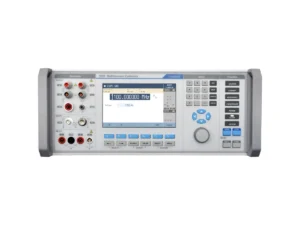
No Laptop Required The entire test sequence — setup, execution, data capture, and result interpretation — runs on the unit itself via a large 7-inch colour touchscreen. The intuitive interface keeps training time low and reduces the risk of operator error, even for less experienced test personnel. All measurements are stored internally (capacity for at least 1,000 test records), and data can be exported via USB or LAN for report generation using the included Megger Book Lite software.
Continuous Duty Cycle The VLF Sine Wave 62 kV operates on a continuous duty cycle — meaning there’s no need to pause for equipment cool-down between tests. For teams working through multiple cable bays in a substation or testing a long cable route section by section, this is a practical time-saver.
Wide Input Voltage Range The unit accepts any supply from 100 V to 264 V at 50 or 60 Hz, making it compatible with Australian 230 V / 50 Hz supply as well as generator power sources commonly used on remote or construction sites. An Australian mains cable (order no. 90020435) is available to ensure correct plug compatibility.
Built for Australian Conditions With an operating temperature range of -20 °C to +55 °C and IP 21 ingress protection, the VLF Sine Wave 62 kV handles the environmental demands of Australian infrastructure work — from hot coastal substations to alpine cable routes.
Safety Is Non-Negotiable
Working at voltages up to 62 kV demands uncompromising safety features. The VLF Sine Wave 62 kV incorporates:
- Automatic discharge of the test object — once a test concludes, the system automatically discharges residual stored energy in the cable under test. This is not optional; it’s built into every test sequence.
- Analogue residual voltage indicator — a physical, always-visible indicator that shows the operator the cable’s charge status at all times, independent of software. No need to trust a screen readout when deciding whether it’s safe to disconnect.
- Breakdown detection — the unit detects cable breakdown events and handles them safely, protecting both the operator and the equipment under test.
- External safety unit option — for high-risk testing environments, an optional external safety unit (with or without operating controls) provides additional interlock capability for multi-person or remote test setups.
These features align with the safety obligations under AS/NZS 3000 and Safe Work Australia electrical safety guidelines, supporting the duty-of-care requirements that every electrical contractor and asset owner carries when working on live or recently energised medium voltage infrastructure.
Reporting and Compliance Documentation
In the Australian market, test documentation is increasingly central to asset management compliance, insurance requirements, and regulatory obligations. The VLF Sine Wave 62 kV makes reporting straightforward:
- All test data is automatically stored on the unit’s internal memory
- Datasets export via USB or LAN to the included Megger Book Lite PC software
- Results include automatic interpretation against IEEE 400.2 criteria, reducing the subjectivity in post-test reporting
- Wireless data transfer is planned for a future firmware update, further streamlining field-to-office workflows
- Optional Megger Book 3 full-licence software (order no. 2015875) provides advanced analysis and report customisation capabilities for organisations with rigorous asset condition reporting requirements
TECHNICAL SPECIFICATIONS TABLE
| Specification | Value | Why It Matters |
|---|---|---|
| Output Voltage — VLF Sine Wave | 0–44 kV RMS / 0–62 kV peak | Covers testing of cables rated up to 35 kV; meets IEEE 400.2 VLF sine wave requirements |
| Output Voltage — DC | ±0–62 kV | Enables DC withstand and sheath testing per IEC 60229 |
| Output Voltage — VLF Rectangular | 0–62 kV | Provides additional test mode flexibility |
| Voltage Accuracy | ±1% | Precise voltage delivery ensures test results are repeatable and defensible |
| Output Current | 23 mA @ 62 kV peak | Sufficient source current to stress long or large-diameter cables without current limiting |
| Frequency Range | 0.01–0.1 Hz (auto-adjusted) | Automatic frequency selection based on cable load eliminates manual calculation errors |
| Maximum Test Capacity | 10 µF | Accommodates long underground cable runs and high-capacitance cable types |
| Duty Cycle | Continuous | No cool-down periods; suitable for multi-test substation campaigns |
| Tan Delta Measuring Range | 10⁻⁴ to 100 | Covers the full range of insulation conditions from healthy to severely degraded |
| Tan Delta Accuracy | 10⁻⁴ | Detects early-stage insulation deterioration before failure risk increases |
| Tan Delta Resolution | 10⁻⁵ or 10⁻⁶ | High sensitivity for trending analyses and trending limit comparisons |
| Sheath Testing | 0 to -20 kV DC | Verifies outer jacket integrity post-installation or after mechanical disturbance |
| Sheath Fault Pinpointing | 0 to -20 kV DC with pulse modes | Pinpoints sheath defect location to reduce unnecessary excavation |
| Display | 7″ colour touchscreen | Full test control and data review without an external laptop |
| Internal Memory | ≥1,000 measurements | Stores complete test histories; no data lost if USB export is delayed |
| Interfaces | USB, LAN, wireless (future) | Flexible data export; compatible with Megger Book Lite reporting software |
| Input Supply | 100–264 V, 50/60 Hz, 2,000 VA | Compatible with 230 V / 50 Hz Australian supply and generator power |
| Operating Temperature | -20 °C to +55 °C | Suitable for full range of Australian field environments |
| Storage Temperature | -20 °C to +70 °C | Safe for long-term storage in vehicles and equipment bays |
| Weight | 59 kg | Lightest in its voltage class; manageable for two-person field crews |
| Dimensions (W × H × D) | 530 × 640 × 510 mm (670 mm incl. handles) | Compact footprint for substation bays and cable testing vaults |
| Protection Class | IP 21 | Protected against vertical drip; suitable for covered outdoor environments |
| Standards Compliance | IEEE 400.2, IEC 60229 | Test results align with internationally recognised cable testing and sheath testing standards |
APPLICATION USE CASES
1. Post-Installation Acceptance Testing — Underground Distribution Cables
After laying a new 11 kV or 22 kV XLPE underground cable for a residential subdivision or industrial estate, the installing contractor uses the VLF Sine Wave 62 kV to perform a VLF AC withstand test before energisation. The unit automatically adjusts frequency to the cable’s capacitance, runs the prescribed test duration, and stores a timestamped record — providing the network owner with documented proof of insulation integrity prior to connection.
2. Predictive Maintenance Diagnostics — Ageing Cable Networks
A state-based electricity distributor managing ageing PILC (paper insulated lead covered) or early-generation XLPE feeders uses the tan delta module to build a condition baseline across its cable asset register. By trending dissipation factor values year-on-year against IEEE 400.2 limits, maintenance planners can prioritise cable replacement based on actual condition data rather than age alone — reducing both capital expenditure and unplanned outage risk.
3. Post-Fault Repair Verification — Industrial Plant
Following an insulation fault and cable repair in a 6.6 kV industrial plant, the maintenance team performs a DC withstand test and tan delta measurement before reconnecting the cable. The automatic result interpretation confirms whether the repair is sound, providing documented evidence for both internal records and insurer requirements under AS/NZS 3000 compliance obligations.
4. Sheath Integrity Testing — New Cable Routes
A civil and electrical contractor installs a 22 kV cable through conduit across a major road crossing. Before backfilling, the sheath is tested at -10 kV DC to confirm no damage occurred during installation. Any sheath breakdown detected at this stage is rectified before reinstatement, avoiding costly road excavation later.
5. Sheath Fault Pinpointing — Service Restoration
A fault location team is called to investigate a sheath fault alarm on a 33 kV transmission cable. Using the pulsed DC mode in conjunction with the optional ESG NT2 step voltage probe, the team walks the cable route and pinpoints the fault location to within the accuracy of the system — dramatically reducing the excavation footprint and service restoration time.
6. Full Cable Diagnostics — Expanded PD Testing
A power utility deploying the optional PDS 62-SIN coupler uses the combined system to perform simultaneous VLF withstand, tan delta, and partial discharge measurements on a 22 kV feeder suspected of moisture ingress. The PRPD patterns generated by the PD coupler enable the test team to distinguish between corona activity at terminations (benign) and internal PD at a mid-route joint (actionable) — preventing a misdiagnosis that could have led to premature cable replacement or, worse, an in-service failure.
7. Test Reporting and Compliance Documentation
Asset managers and test engineers across Australian electricity networks use the Megger Book Lite or Megger Book 3 software to generate structured test reports from VLF Sine Wave 62 kV data exports. These reports provide the documentation trail required for asset management systems, regulatory reporting, and audit defence — particularly relevant for NSPs (network service providers) operating under AER compliance frameworks.
What is a VLF cable tester used for?
A VLF (Very Low Frequency) cable tester is used to test the insulation integrity of medium voltage underground power cables. It applies a high-voltage AC test signal at a very low frequency (typically 0.01–0.1 Hz) rather than the normal power frequency (50 Hz), which dramatically reduces the reactive power required. This allows a compact, portable unit to safely perform withstand testing, insulation diagnostics (tan delta), and sheath testing on cables rated from 6.6 kV up to 35 kV. VLF testing is recognised by IEEE 400.2 as a preferred method for XLPE and EPR cable system assessment.
What is the difference between VLF withstand testing and tan delta testing?
VLF withstand testing applies a high voltage to the cable insulation to verify it can withstand operating stress without failing — it produces a pass/fail result. Tan delta testing (also called dissipation factor testing) measures the dielectric losses in the insulation at near-service voltage levels, providing a quantitative indicator of insulation condition, moisture ingress, and ageing. Withstand testing proves integrity; tan delta testing assesses health and predicts future risk. The Megger VLF Sine Wave 62 kV can perform both tests, with the optional internal tan delta module evaluated automatically against IEEE 400.2 criteria.
How long can a cable be tested with a VLF 62 kV tester?
The Megger VLF Sine Wave 62 kV can test cables with a capacitance up to 10 µF. For a typical 22 kV, 95 mm² XLPE cable (around 0.4 µF/km), this corresponds to approximately 25 km of cable length. The unit’s smart frequency adjustment automatically selects the appropriate test frequency based on the measured cable capacitance, making long-cable testing straightforward without manual calculation.
What does tan delta tell you about a cable’s condition?
Tan delta (also known as dissipation factor or loss angle) measures the ratio of resistive to capacitive current flowing through a cable’s insulation under an applied voltage. A low tan delta value indicates healthy, dry insulation. Elevated or increasing tan delta values indicate insulation degradation, moisture ingress, thermal damage, or contamination. IEEE 400.2 provides diagnostic thresholds: cables with tan delta above defined limits or showing increasing trend values are flagged for closer monitoring or planned replacement, allowing asset managers to act before an in-service failure occurs.
Can a VLF tester perform partial discharge testing?
A standard VLF tester provides the high-voltage source needed for partial discharge (PD) measurements, but PD detection requires a separate PD coupler connected in parallel with the cable under test. The Megger VLF Sine Wave 62 kV is designed to work with the optional Megger PDS 62-SIN PD coupler, creating a combined system that delivers VLF AC voltage while simultaneously measuring, localising, and classifying partial discharge activity in real time. This combined approach enables both withstand testing and full PD diagnostics in a single field deployment.
What safety features does the Megger VLF Sine Wave 62 kV have?
The Megger VLF Sine Wave 62 kV incorporates three core safety mechanisms. First, an automatic discharge circuit discharges the test object (cable) at the end of every test cycle, eliminating residual stored energy risk. Second, a physical analogue residual voltage indicator provides a hardware-level, always-visible display of the cable’s charge status — independent of the touchscreen — so the operator can confirm safe discharge before disconnecting. Third, breakdown detection circuitry identifies cable insulation failure events and handles them safely. An optional external safety unit with interlock capability is also available for multi-operator or restricted-access test environments.


Reviews
There are no reviews yet.